A Comet!
[Updated 14 April 2026]
Another clear night, and another go at C/2025 R3 (PanSTARRS). Started earlier this time, and managed more shots and a slightly higher gain:
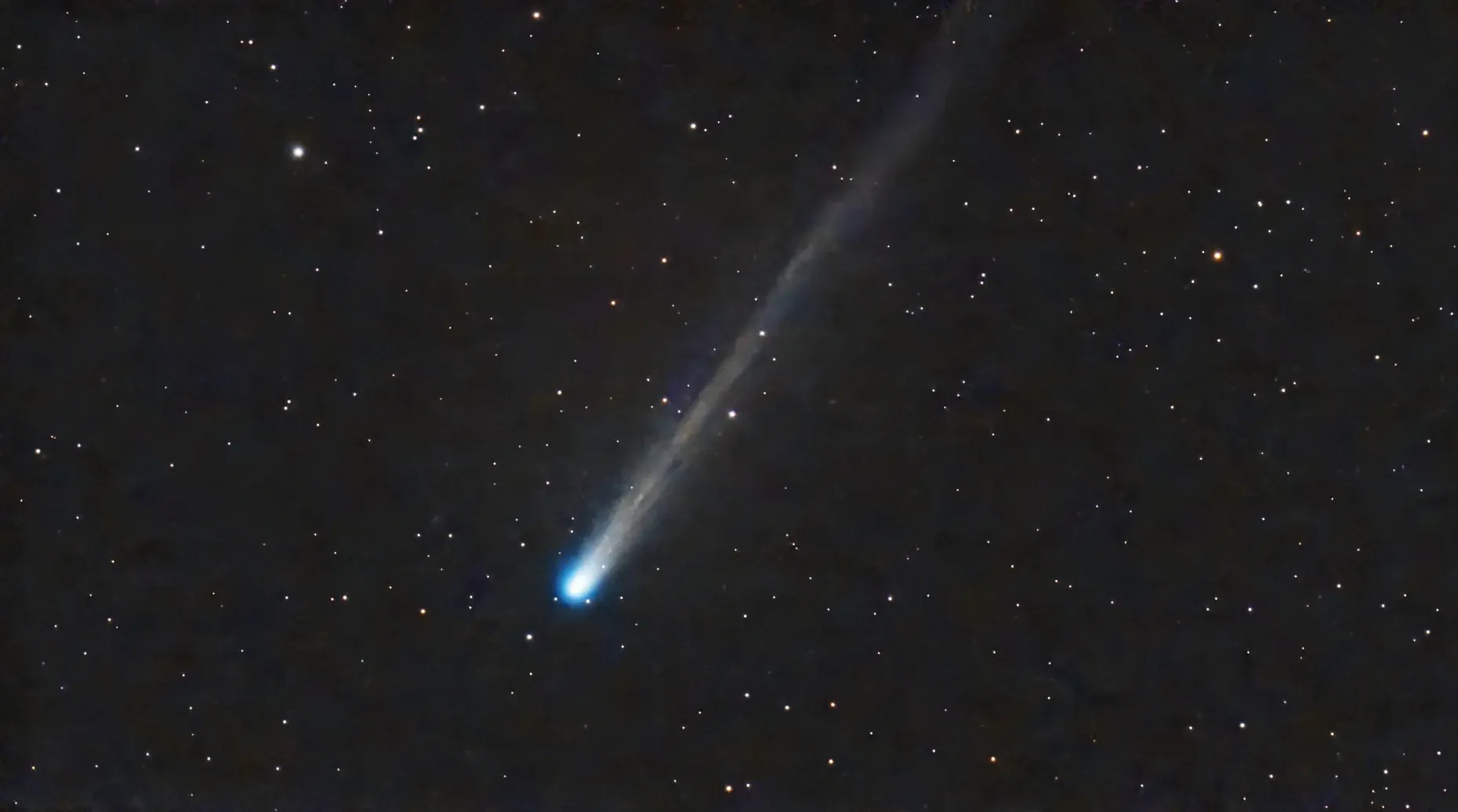
This was 60 15-second photos at gain 70. Gamma and equalisation in PhotoDesk. I centred the shoot on a star slightly above the comet, to get more of the tail in.
Comets are fairly fast-moving things, especially when near the sun, and a current limitation of the Dwarf Mini is that it tracks the stars, not the comet. You can see there’s a slight elongation of the comet’s head here, as it’s moved slightly over the course of the exposures.
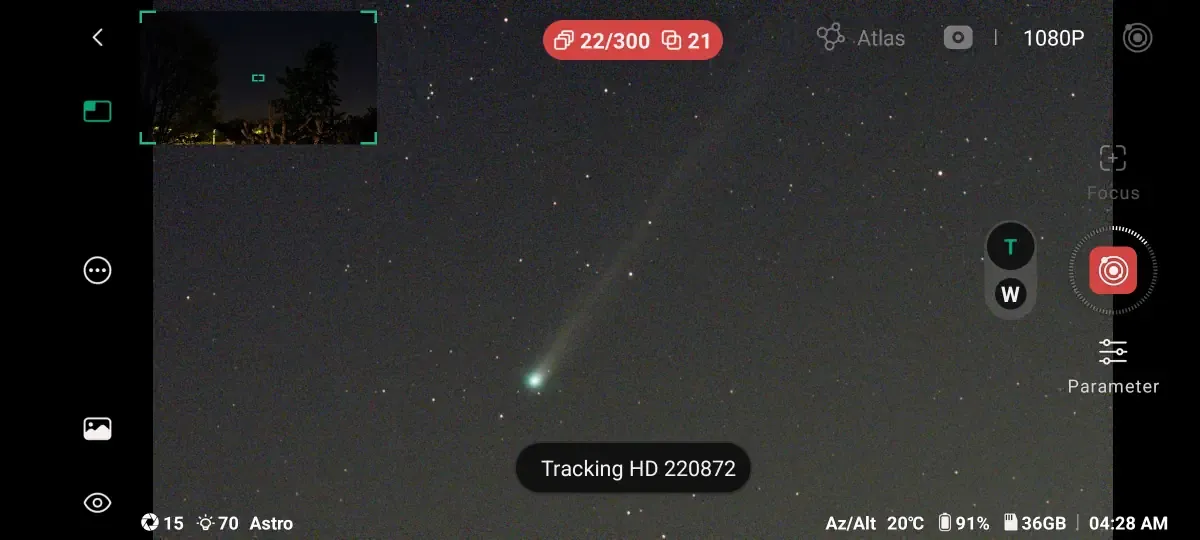
Here’s a screenshot of the in-progress shoot, showing the location between the trees:
[Original post:]
Comets are tricky things to image. They’re brightest when they’re closest to the sun, which means they’re low in the sky and best visible around sunset or sunrise.
There’s a comet around now with the rather unexciting name of C/2025 R3 (PanSTARRS). There’s a naming convention here: the “C” denotes a non-periodic comet (meaning it’s unlikely to return); “2025 R3” gives the year and half-month when it was first observed (so “R”, the 18th letter, is the first half of September, the 9th month) and it’s the third comet discovered in that period; and “(PanSTARRS)” is who or what discovered it, in this case the automated sky survey system Pan-STARRS in Hawaii.
As of today, 13 April 2026, it’s low in the eastern sky before sunrise. We’re surrounded by houses and trees here, but looking at the comet in Stellarium it looked like it might be observable from an upstairs window between a fortuitous gap in the trees, at around 5am.
And indeed it was!
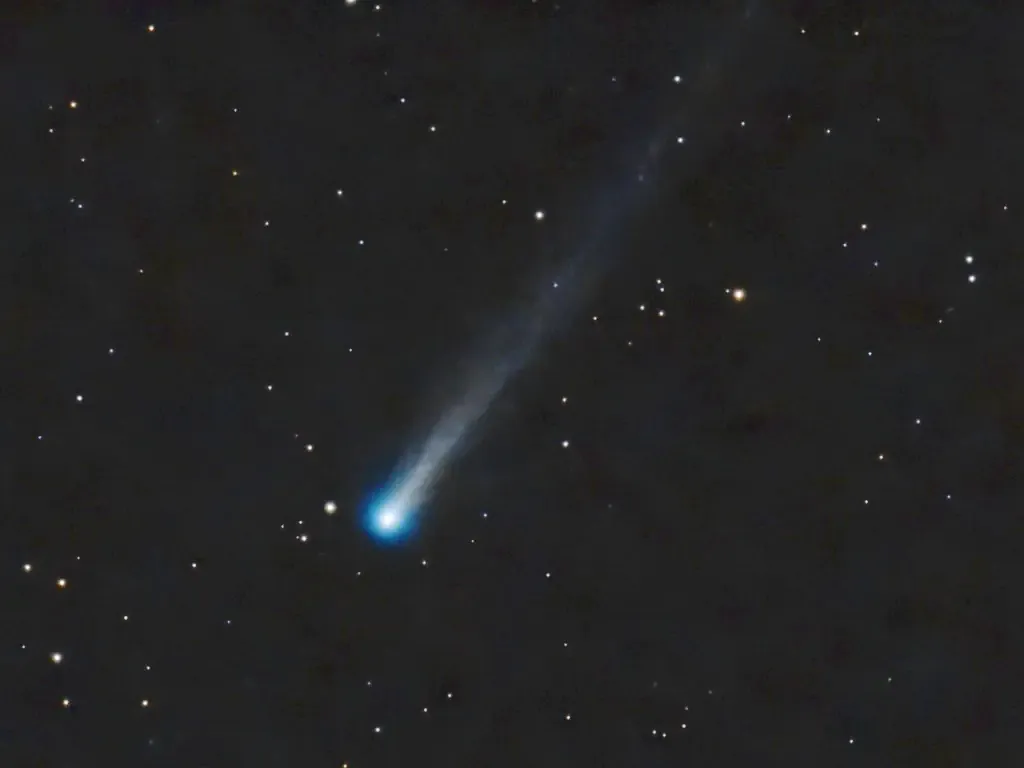
This was 25 15-second shots at gain 60, with two failures: one satellite, and one tracking problem, unsurprising given the comet’s altitude (about 10°) and proximity of dawn. It would have been better to take a lot more shots with longer exposures, but the sky was inexorably lightening as the dawn approached.
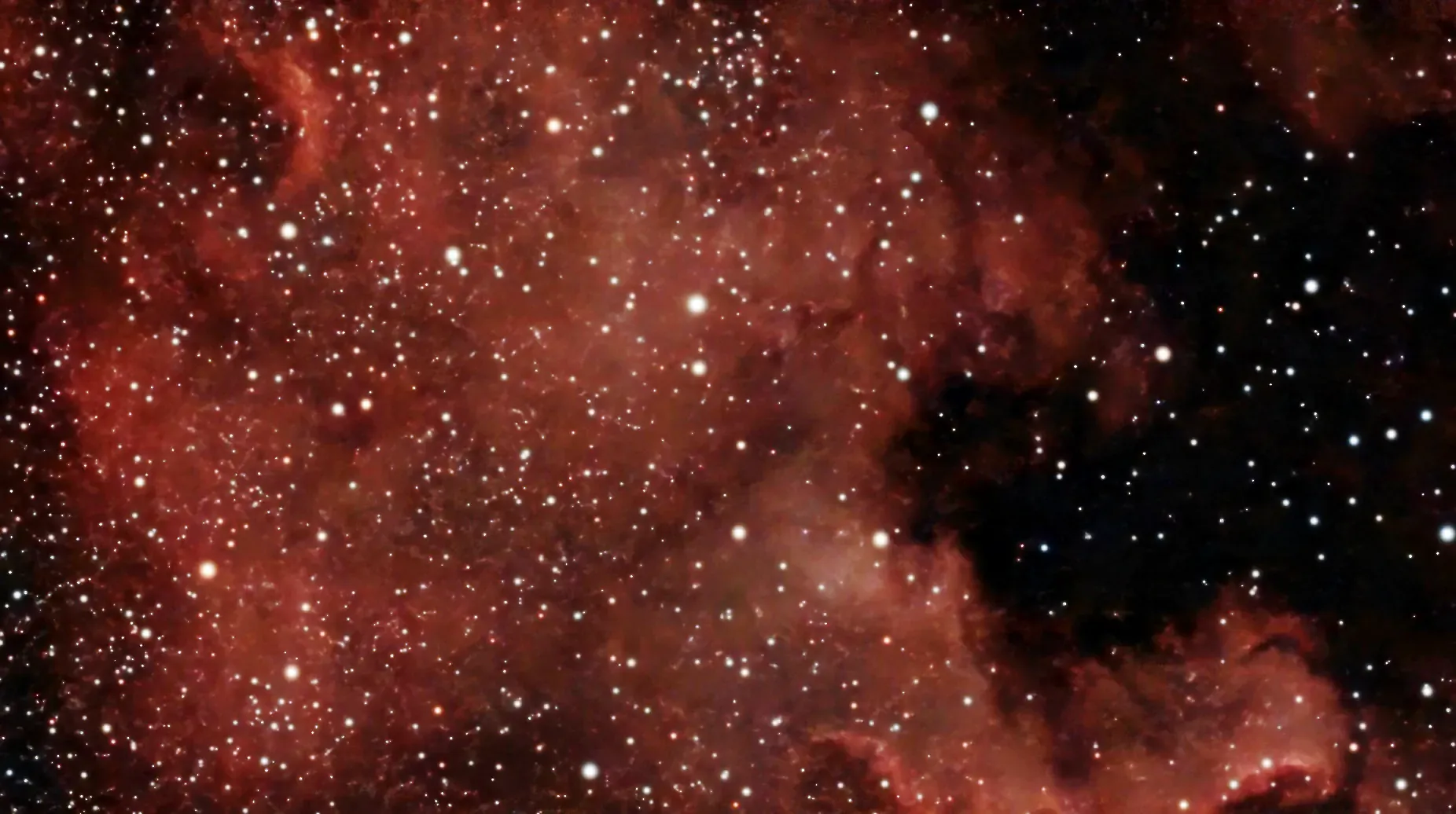
The alarm was set for 4am, and while waiting for the comet to rise I tested out the Mini by imaging the North American nebula, as below (or part of it — the bit here is Florida and the Gulf of Trump America Mexico; rotate it 90° clockwise and you can see the vague resemblance). It was fortunate I did this, as the focus was clearly off somewhat. Still, a preview of what will be available in the summer months at more sensible times.
Add comment
Fill out the form below to add your own comments