An Aurora, a Flaming Star, a Soul and Mars
October 10. A lovely clear night started with a country-wide aurora:
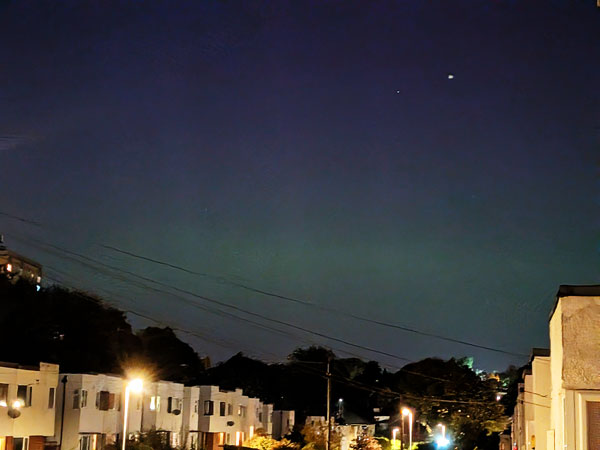
This was taken with a phone — I tried using the Mini’s wide-angle camera but it had a very limited view to the north from the garden, and it didn’t work well. I could have moved it, but that would have messed up the equatorial alignment.
Anyway, a good start to the evening. I had set up a schedule of three objects, starting with some more work on the Soul Nebula upping the total integration time to 10 hours. More detail than the previous megastack, and the fainter nebulosity is clearer.
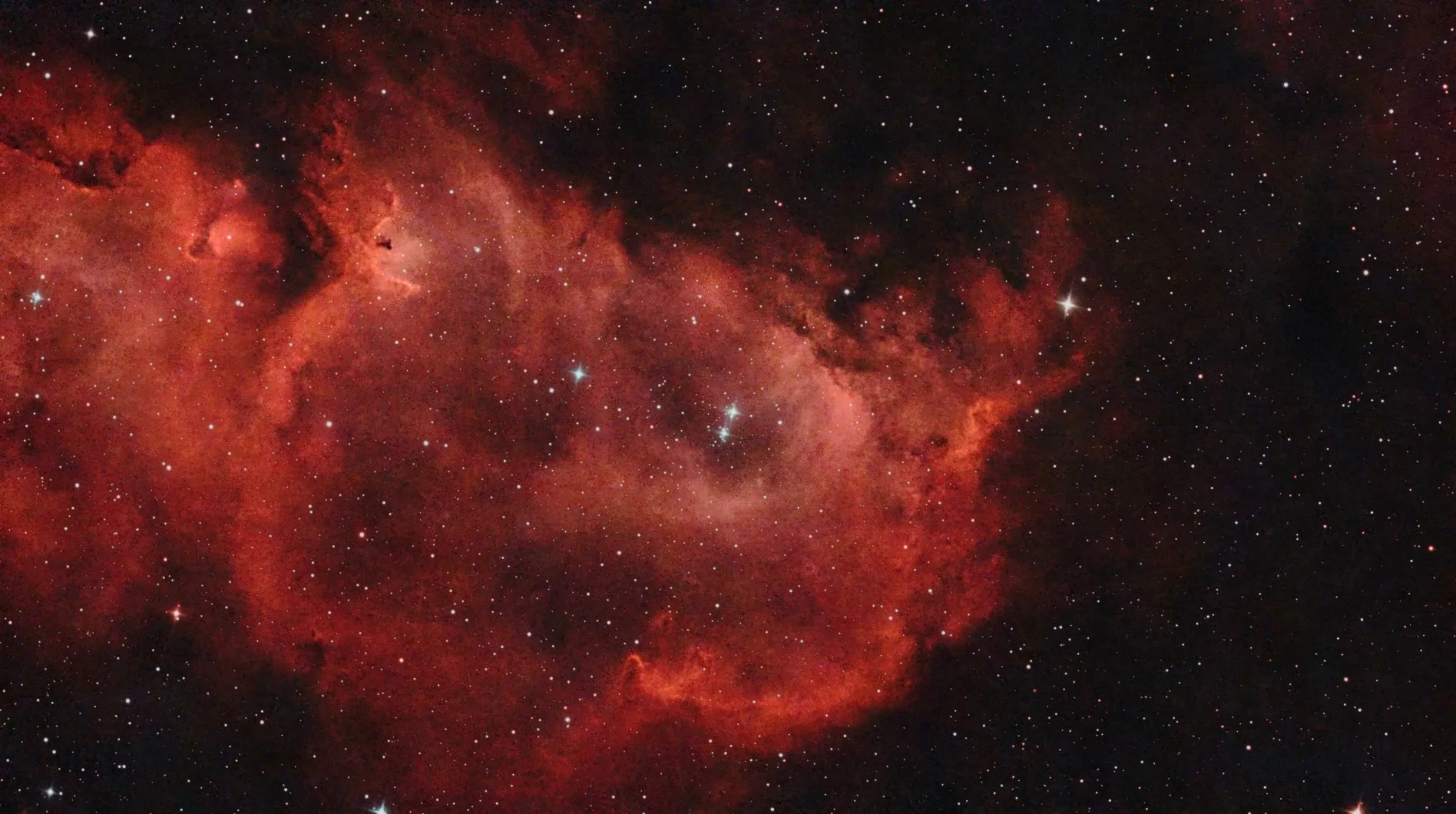
Details:
Target: IC 1848 (Soul Nebula, Westerhout 5, Sh-2 199, LBN 667)
Megastack session 1:
Equipment: Dwarf Mini, Duo-Band filter, perfect EQ
Time: 2026-07-18 01:10-03:30
Integration: 1hr 24mins (84×60secs, +45 failures), gain 60
Conditions: Clear; Bortle 6
Megastack session 2:
Equipment: Dwarf Mini, Duo-Band filter, perfect EQ
Time: 2026-08-08 01:40..03:59
Integration: 2hrs 7mins (127×60secs, 0 failures), gain 60
Conditions: Clear; Bortle 6
Megastack session 3:
Equipment: Dwarf Mini, Duo-Band filter, perfect EQ
Time: 2026-10-10 20:11-00:57
Integration: 4hrs 15mins (255×60secs, +6 failures), gain 60
Conditions: Clear; Bortle 6
Total integration: 10hrs 27mins
Processing: PhotoDesk equalisation, gamma, usm 5,60,0
Next up was a 2-panel mosaic of the Flaming Star Nebula, IC 405, in Auriga:
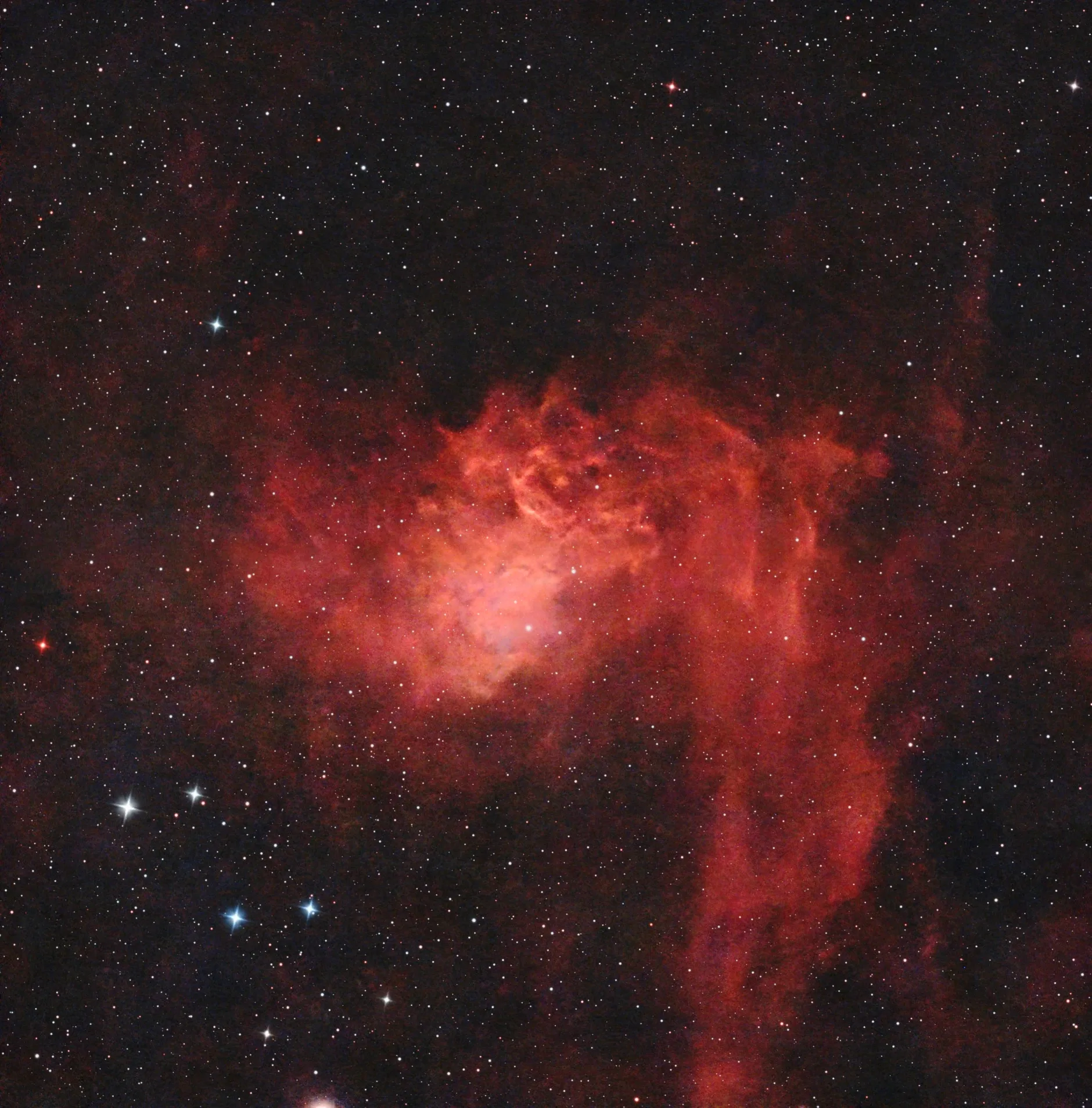
Details:
Target: IC 405 (Flaming Star Nebula)
Equipment: Dwarf Mini, Duo-Band filter, perfect EQ
Time: 2026-10-11 01:08-04:55
Integration: 3hrs 20mins (200×60secs, +4 failures), gain 60; 1hr 40mins/frame
Conditions: Clear, Bortle 6
Processing: PhotoDesk equalisation, gamma
This has both emission and reflection areas, so might benefit from combining with an Astro-filtered session.
Finally, Mars was passing through the Beehive Cluster in Cancer. This is fairly low in the sky at the moment and only gets to be visible at 5am or so. I used 30-second exposures and reduced the gain to 40, to hopefully not blow out Mars too much. The hour-long exposure did mean that Mars is slightly elongated though.
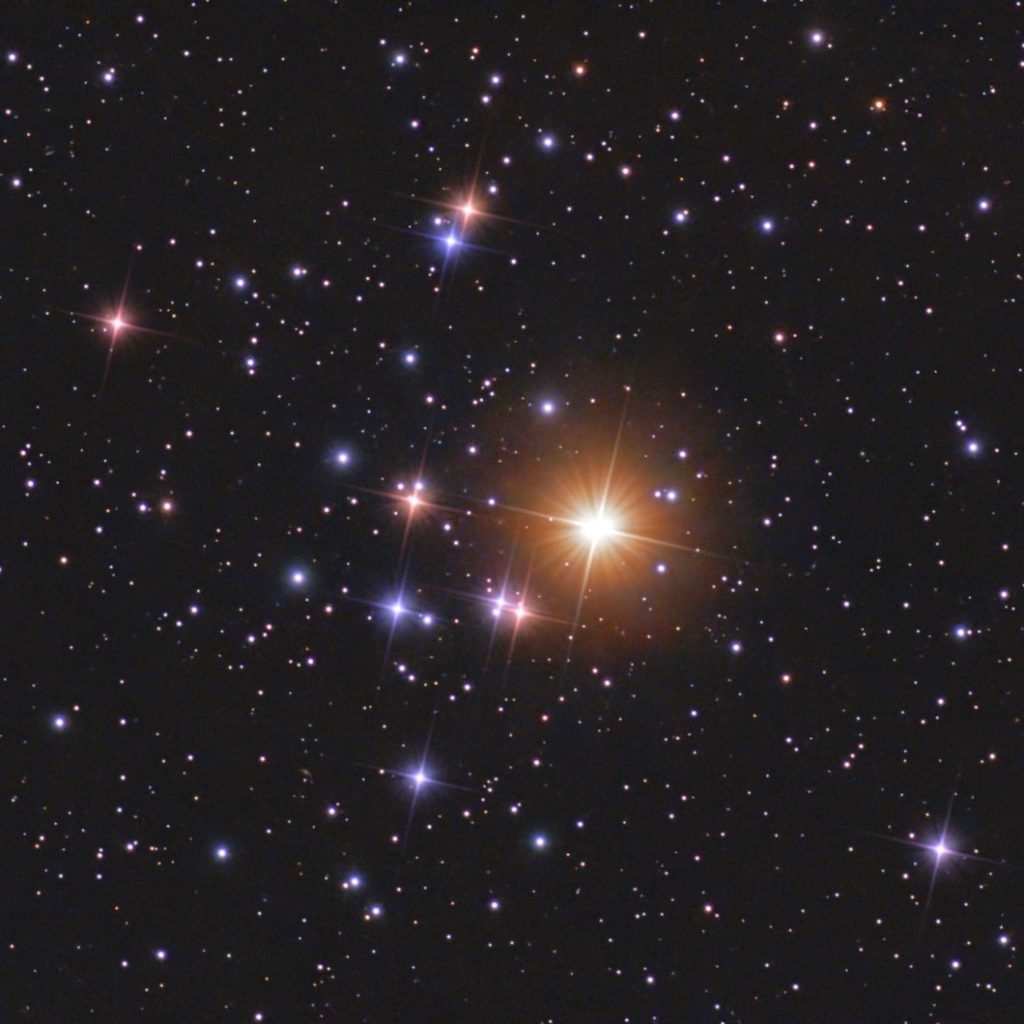
Details:
Target: M 44 (Beehive Cluster + Mars)
Equipment: Dwarf Mini, Astro filter, perfect EQ
Time: 2026-10-11 05:02-06:03
Integration: 54mins (108×30secs, +1 failure), gain 40
Conditions: Clear, Bortle 6
Processing: PhotoDesk equalisation, gamma
And so to bed…
Spider, Take 2
October 7, another clear night and a repeat of the Oct 3 schedule. Like the previous schedule all three sessions were incorrectly marked as failed in the details panel of the app — a known “issue” in the software which will hopefully be fixed soon.
Here’s a megastack of the two IC 417 sessions. More detail, especially in the Fly:
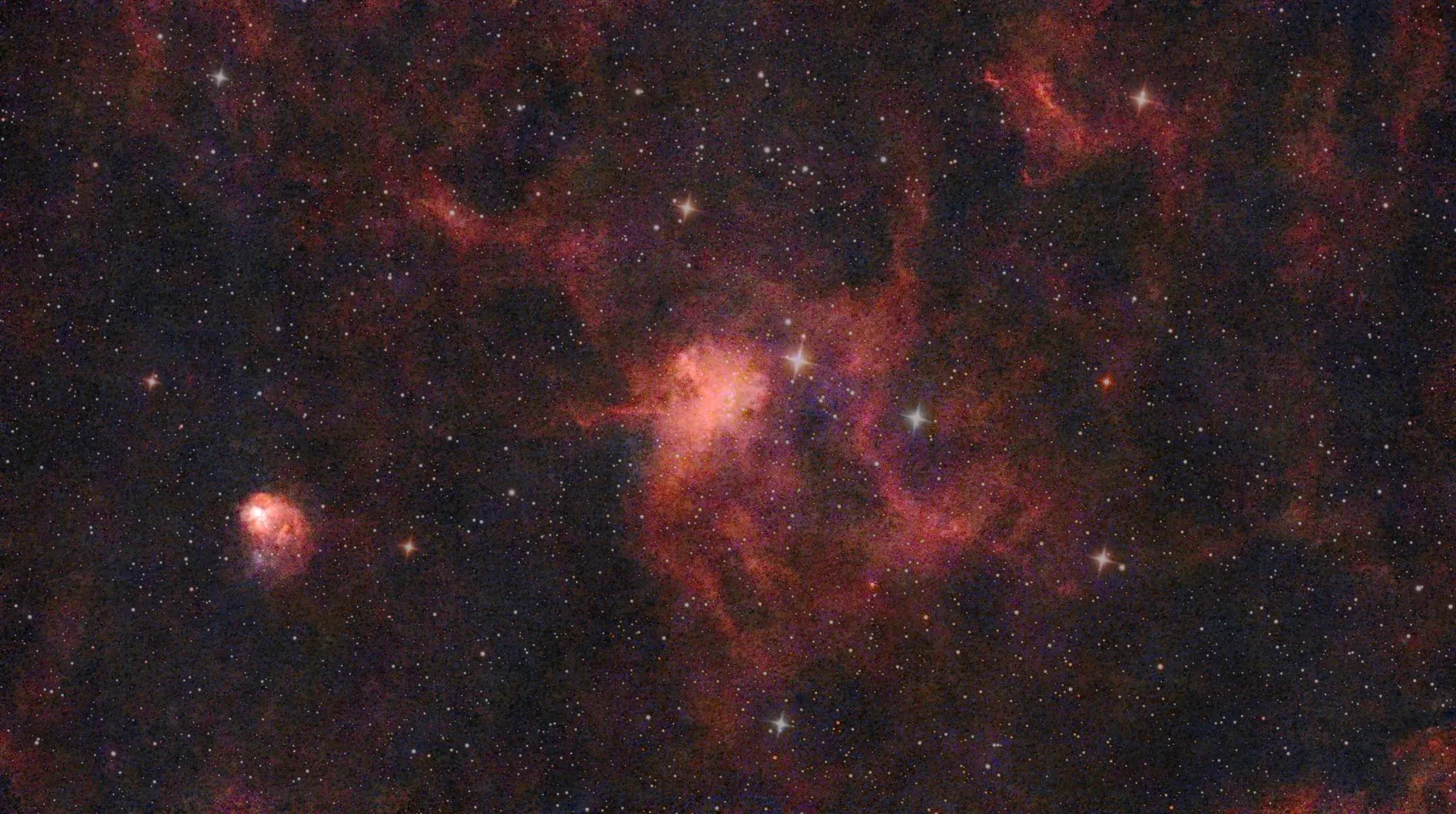
I’ve reduced the star layer opacity to 60%, which brings out the nebulosity a bit more.
And so to bed…
The Spider and The Fly
October 3 was a fully clear night at last, with 0% chance of rain, so I did a schedule of three objects. The nights are getting much longer now, and the schedule ran from 8:00pm to 5:00am the next morning. I always connect a power bank when doing schedules (essential when it’s running for 9 hours), and next morning the Mini still had 100% power and the power bank still had some reserve. The bank I was using was from Lidl, the Tronic rated at 20,000mAh.
This is IC 417 and NGC 1931 in Auriga, known as the Spider and the Fly respectively. The Spider is an emission nebula about 7,100 light years away, while the smaller emission and reflection Fly nebula is a bit further, at 7,500 ly.
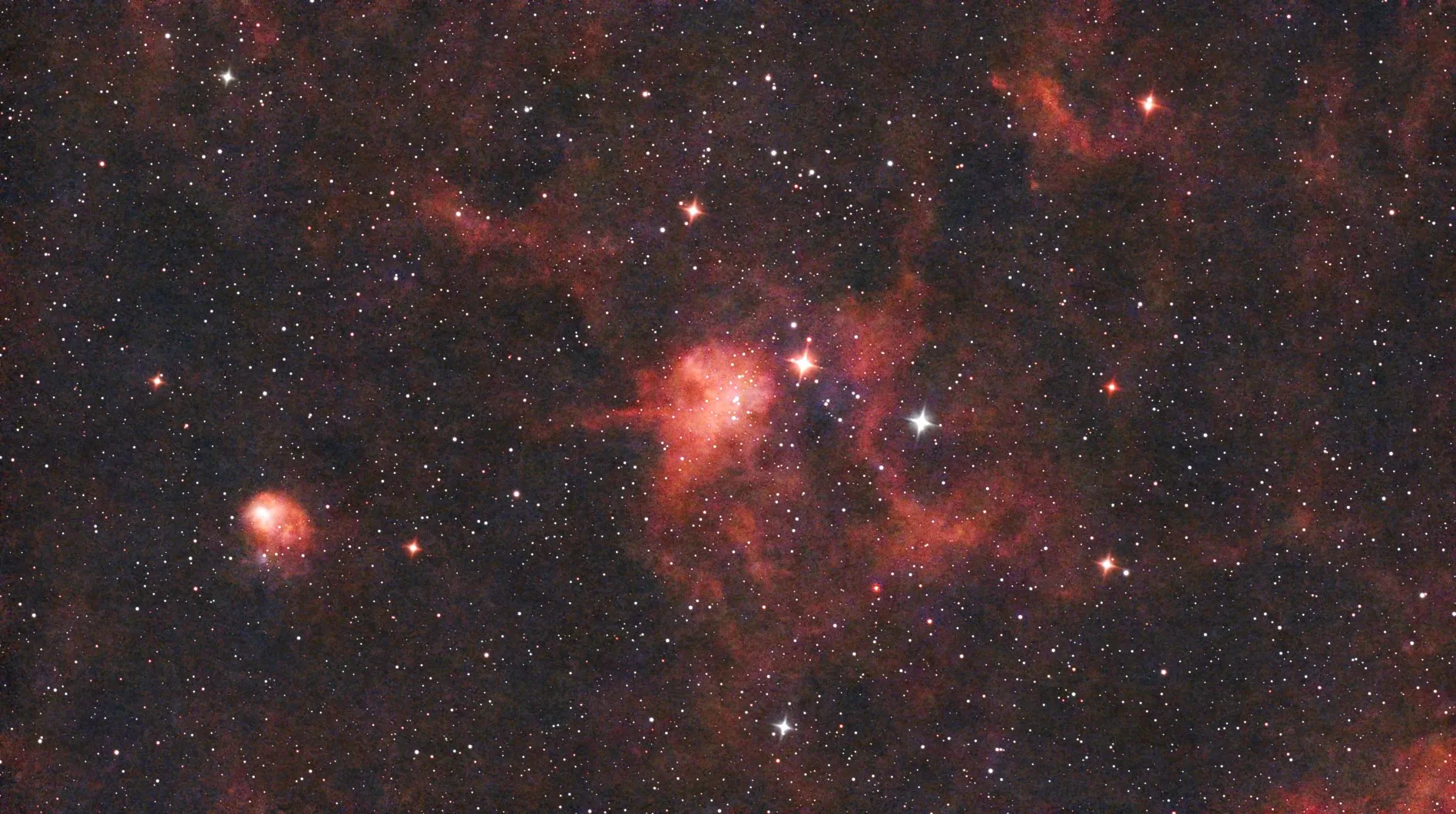
Details:
Target: IC 417 (Spider Nebula)
Equipment: Dwarf Mini, Duo-Band, perfect EQ
Time: 2026-10-04 01:04-05:00
Integration: 3hrs 32mins (212×60secs, +2 failures), gain 60
Conditions: Clear, waning gibbous Moon; Bortle 6
Processing: PhotoDesk equalisation, gamma
The middle session was yet another go at the Triangulum Galaxy, M 33. This is the result of megastacking all my efforts to date, 6 sessions combining 623 images using Astro and Duo-Band filters:
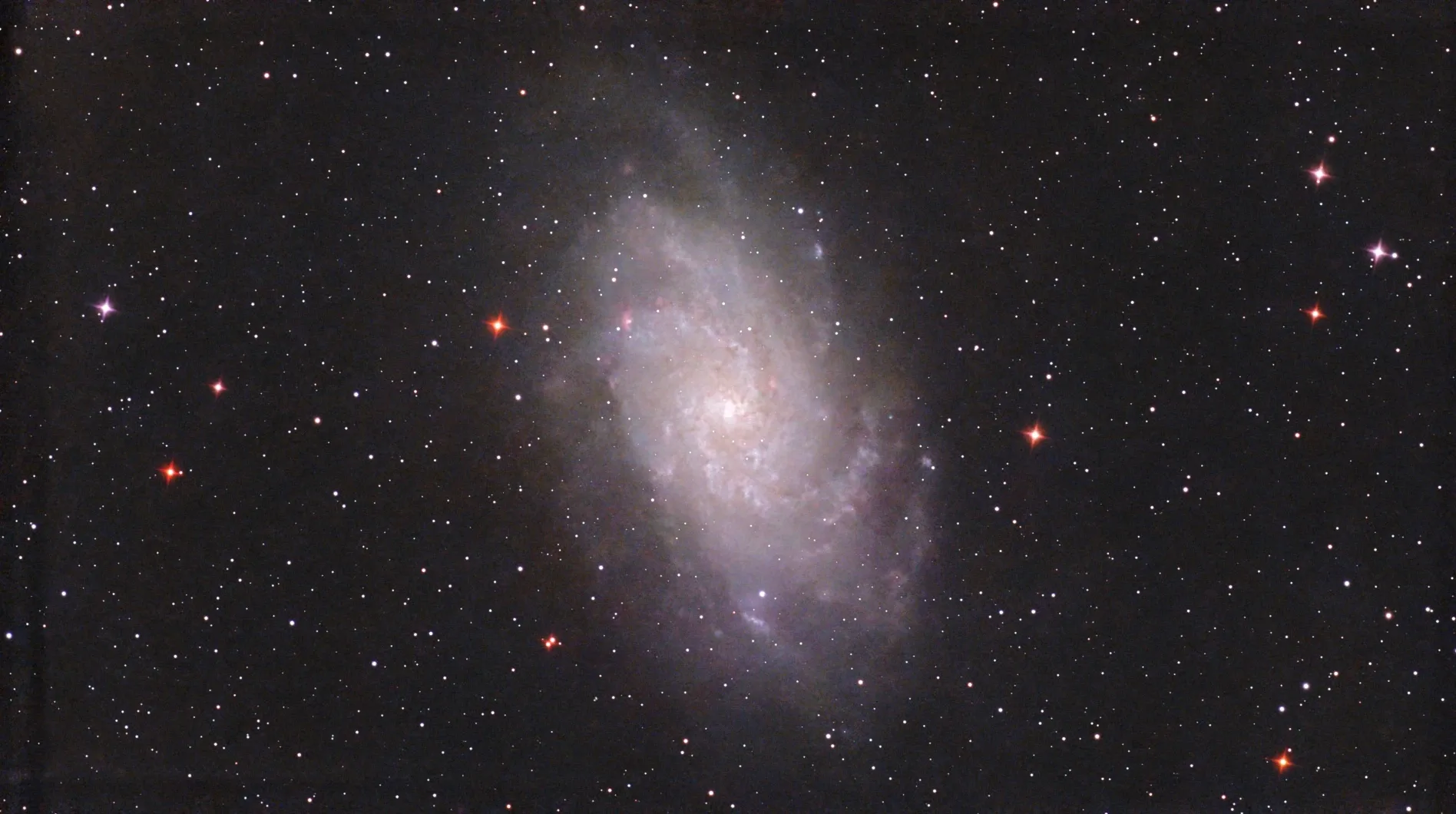
Better, but still needs improvement. I’m hopeful that when the Draco arrives it will do much better at this target.
And so to bed…
M 31, Redone
October 1, a clear night and another session with M 31 before it moves away.
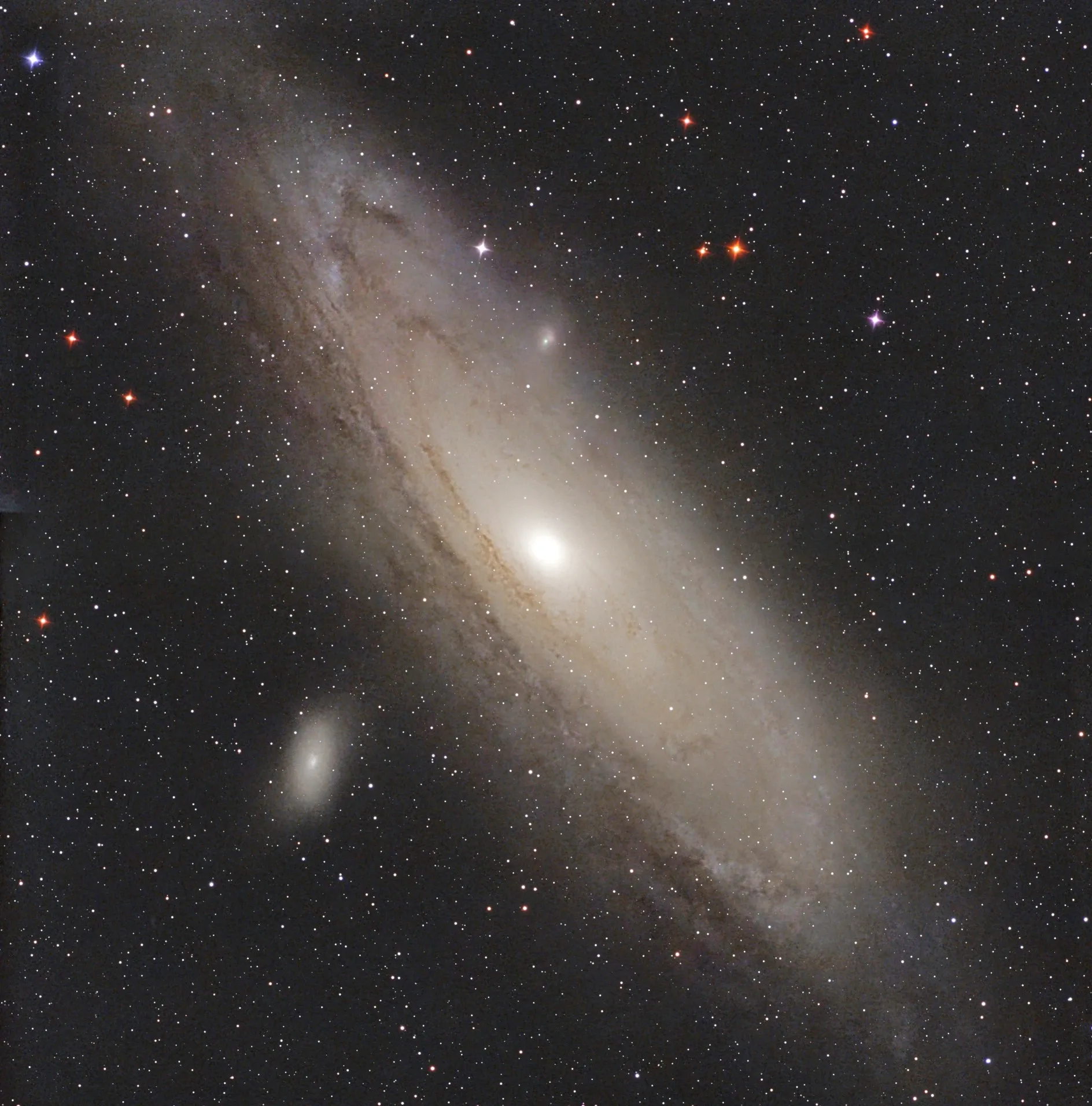
This is a megastack of three mosaic sessions, with somewhat less aggressive processing than the previous effort. It’s easy to overdo unsharp masking, and here it’s radius 5, contrast boost 80%, threshold 0%. Good to have no failures in last night’s session though.
Details:
Target: M 31 (Andromeda Galaxy)
Megastack session 1:
Equipment: Dwarf Mini, Astro filter, perfect EQ
Format: Two-frame mosaic, 1.0×1.8
Time: 2026-09-08, 23:20 - 04:03
Integration: 3hrs 42mins (222×60secs, +28 failures), gain 50
Conditions: Clear with sporadic cloud; Bortle 6
Megastack session 2:
Equipment: Dwarf Mini, Astro filter, perfect EQ
Format: Two-frame mosaic, 1.0×1.8
Time: 2026-09-10, 00:10 - 03:01
Integration: 2hrs 30mins (150×60secs, +1 failure), gain 50
Conditions: Clear; Bortle 6
Megastack session 3:
Equipment: Dwarf Mini, Astro filter, perfect EQ
Format: Two-frame mosaic, 1.0×1.8
Time: 2026-10-01, 20:52 - 01:21
Integration: 4hrs (240×60secs, 0 failures), gain 60
Conditions: Clear, waning gibbous Moon; Bortle 6
Total integration: 10hrs 12mins (5:06 per frame)
Processing: PhotoDesk equalisation, gamma, unsharp mask
And so to bed…
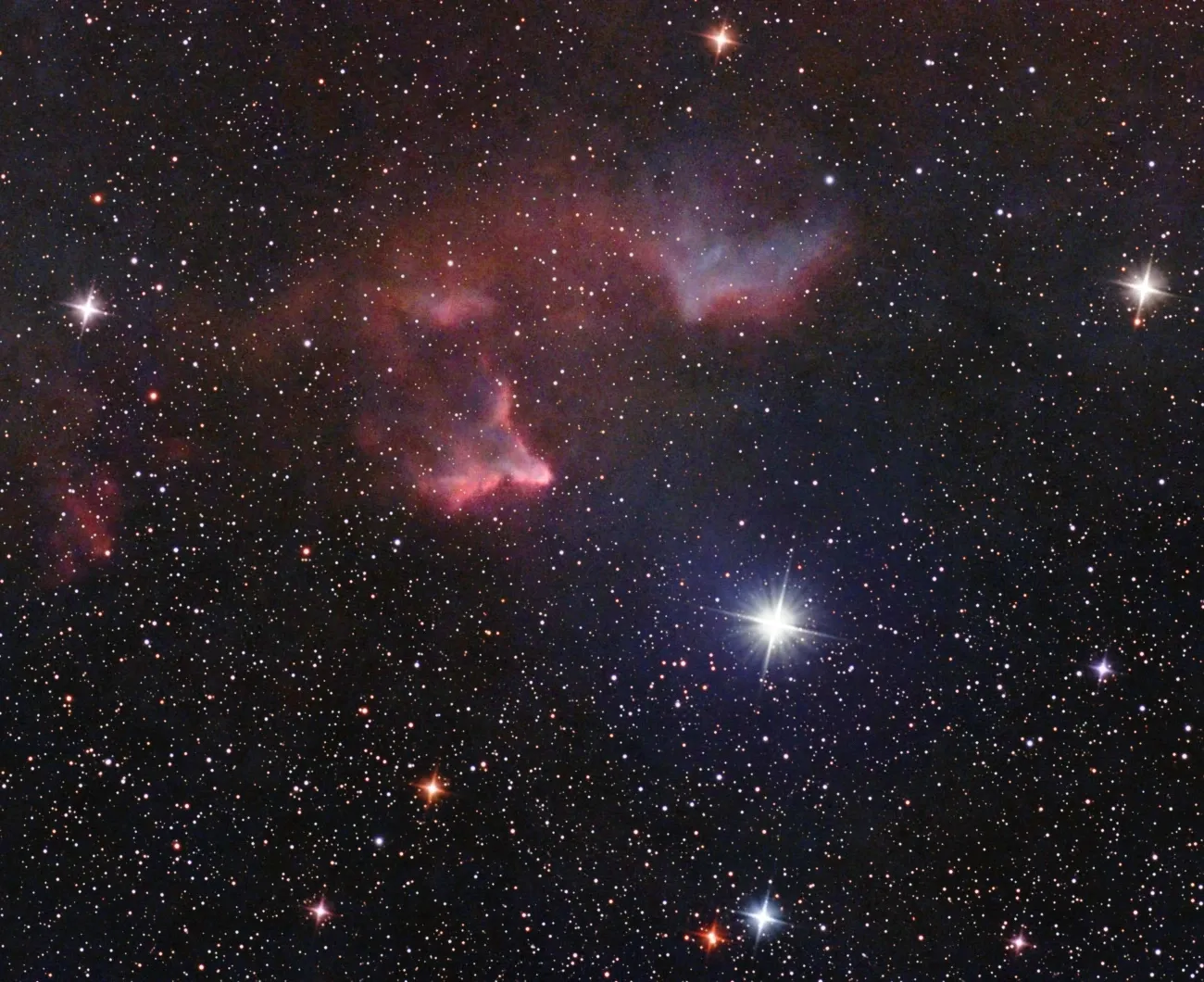
Cassiopeia’s Ghost, Redone
September 28, and the first clear night for many weeks.
Here’s a much better four-session megastack of the Ghost Nebula in Cassiopeia, IC 63. Full details to follow.
And so to bed…
A Supernova, and a Complete M 31
September 8-10. And after more than two weeks, at last some clear skies.
On 21 August I imaged C 30, aka the Deer Lick Group. In early September a supernova was discovered in this galaxy, so I decided to have a go at imaging it. Here’s an animation of the two images with the supernova marked:

So, a success. The 8 September session was interrupted by clouds so was limited to 90 minutes total exposure (the earlier one was 3 hours), so some of the fainter stars haven’t shown up well.
This supernova is designated SN 2026aaiv; more info and pictures here. It’s a type 1a supernova, which means it’s a binary system in which one of the stars (the one that exploded) is a white dwarf. A similar supernova was seen in this galaxy in 2025.
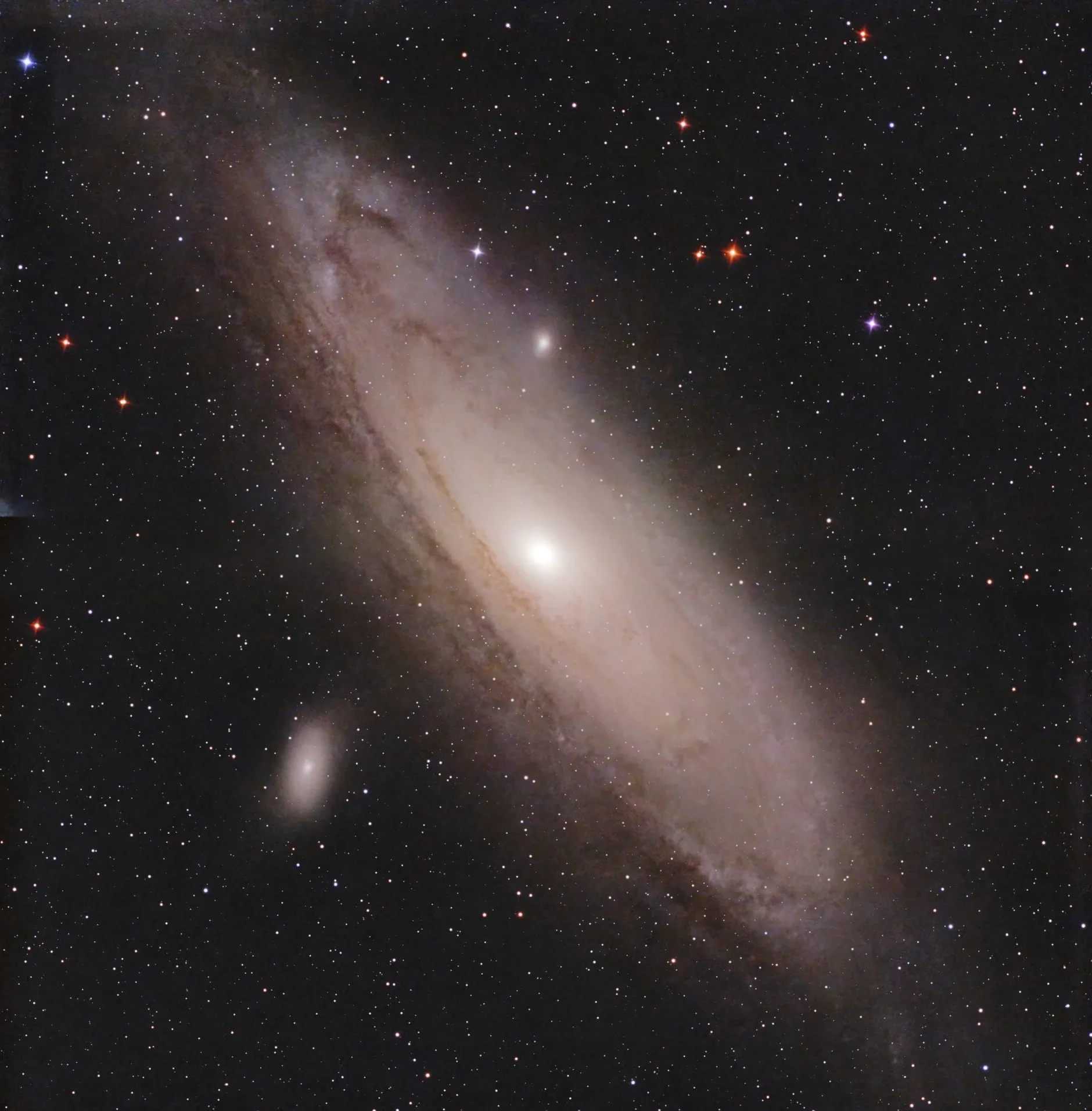
The clear(ish) skies meant I could at last have a go at doing a mosaic of the Andromeda Galaxy to get more of it in the frame. This is a megastack of a pair of 2-frame mosaics taken on 8 and 9 September; the occasional cloud on 8 September caused the left edge problem. It’s a large image, so click for biggie:
And for comparison, an unsharp-masked one (10,100,1). Not sure which is better:
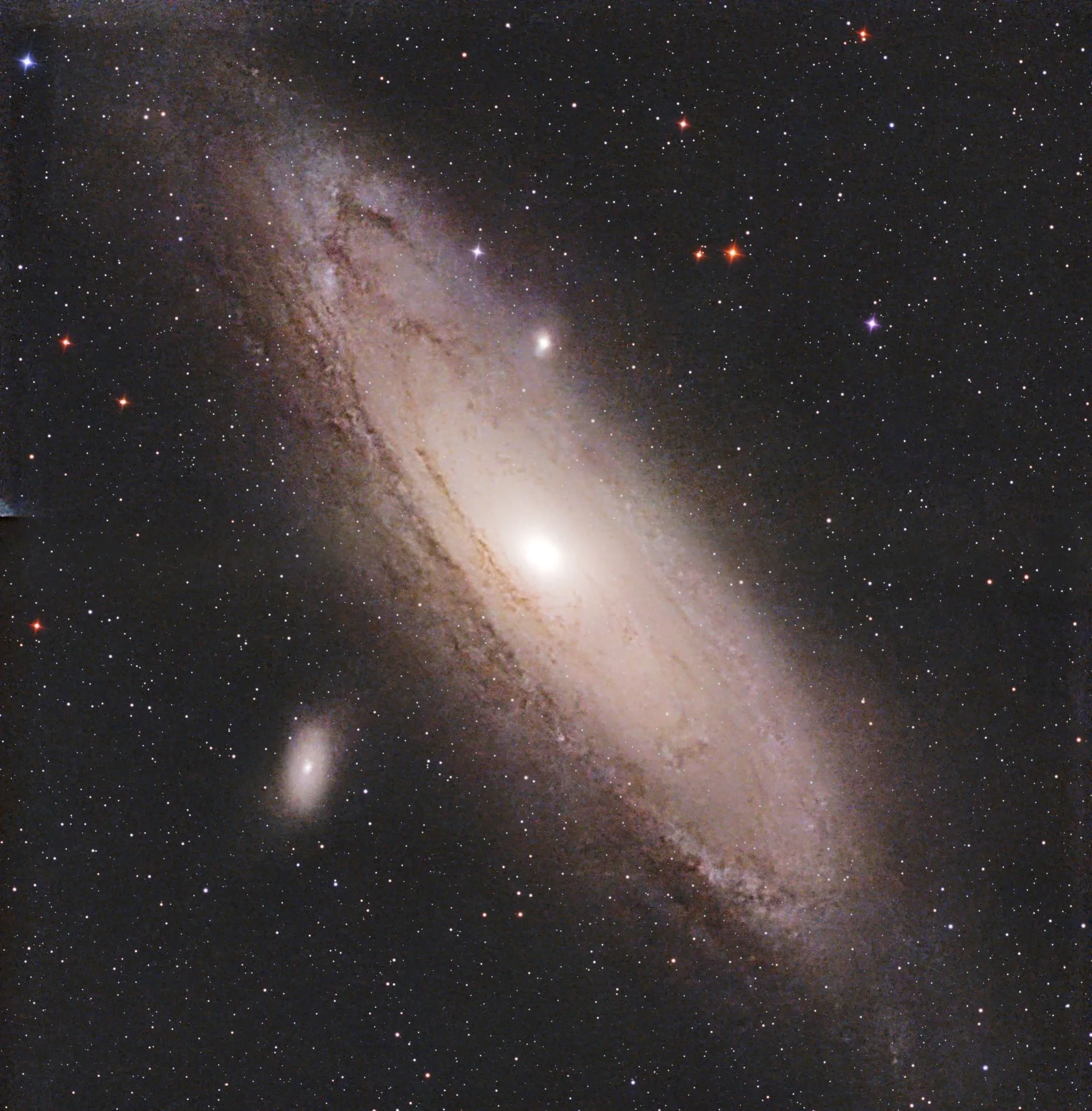
Details:
Target: M 31 (Andromeda Galaxy)
Megastack session 1:
Equipment: Dwarf Mini, Astro filter, perfect EQ
Format: Two-frame mosaic, 1.0×1.8
Time: 2026-09-08, 23:20 - 04:03
Integration: 3hrs 42mins (222×60secs, +28 failures), gain 50
Conditions: Clear with sporadic cloud; Bortle 6
Megastack session 2:
Equipment: Dwarf Mini, Astro filter, perfect EQ
Format: Two-frame mosaic, 1.0×1.8
Time: 2026-09-10, 00:10 - 03:01
Integration: 2hrs 30mins (150×60secs, +1 failure), gain 50
Conditions: Clear; Bortle 6
Total integration: 6hrs 12mins
Processing: PhotoDesk equalisation, gamma
And so to bed…
The Triangulum, Again
August 28. A near-total lunar eclipse should have been visible in the early hours, but when the alarm woke us up the sky was completely clouded over. And even the promised lightning display never turned up. Doh.
So here’s another go at processing the Triangulum Galaxy, M 33:
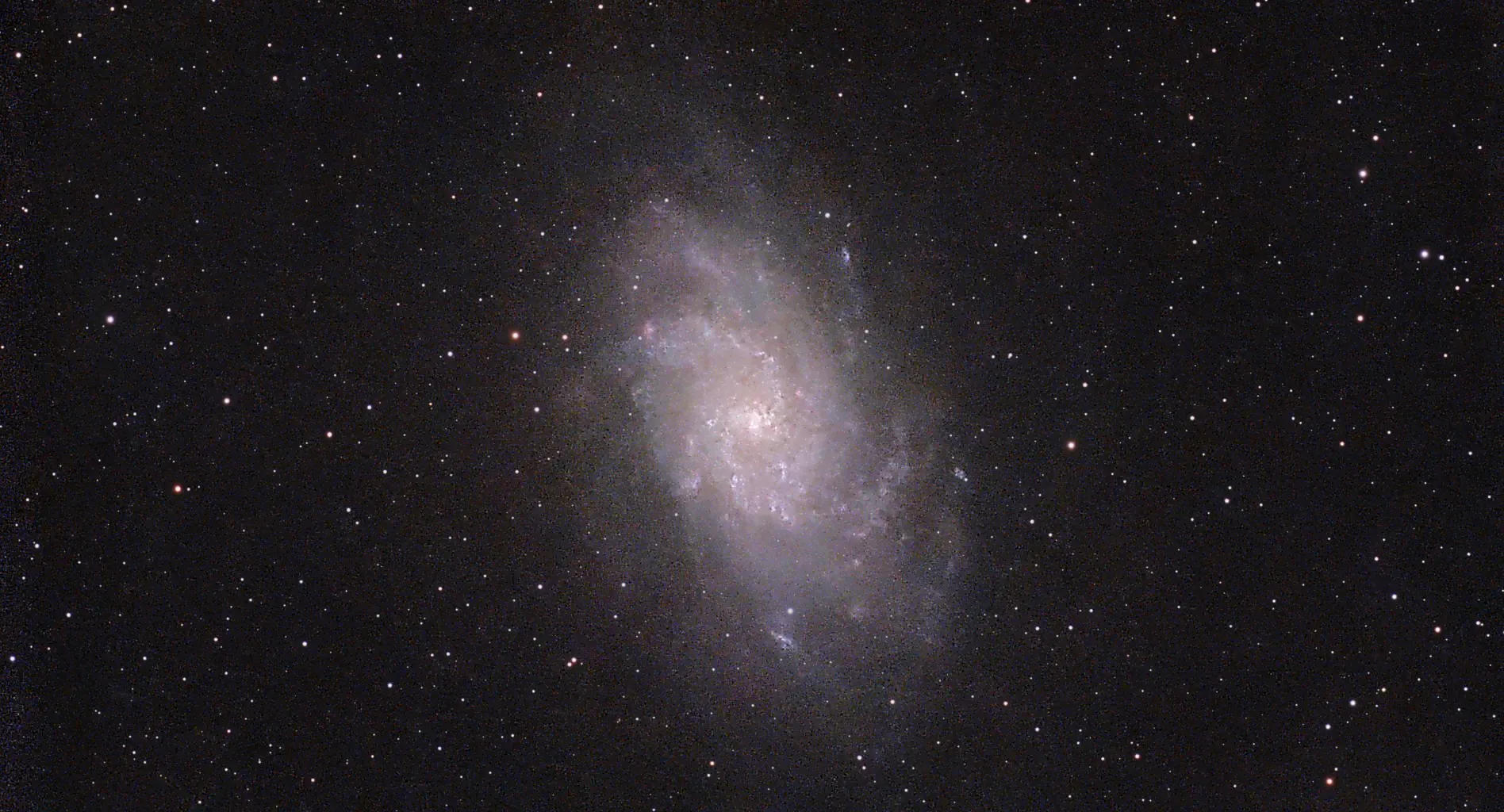
M 33 seems a rather hard target to process, given it’s one of the brightest and closest galaxies. Here I’ve tried unsharp-masking the Astro filtered images from August 14 (radius 2, contrast boost 300, threshold 2). It’s better, but there’s still a lack of detail.
Details:
Target: Triangulum Galaxy (M 33, NGC 598)
Equipment: Dwarf Mini, Astro filter, perfect EQ
Time: 2026-08-14 23:33-02:28
Integration: 2hrs 21mins (141×60secs, +19 failures), gain 60
Conditions: Clear, Bortle 6
Processing: PhotoDesk equalisation, unsharp mask
And so to bed…
An Iris
August 23, a very clear night (and it looks like the last for a while) with a flower.
This is C 4, the Iris Nebula in Cepheus:
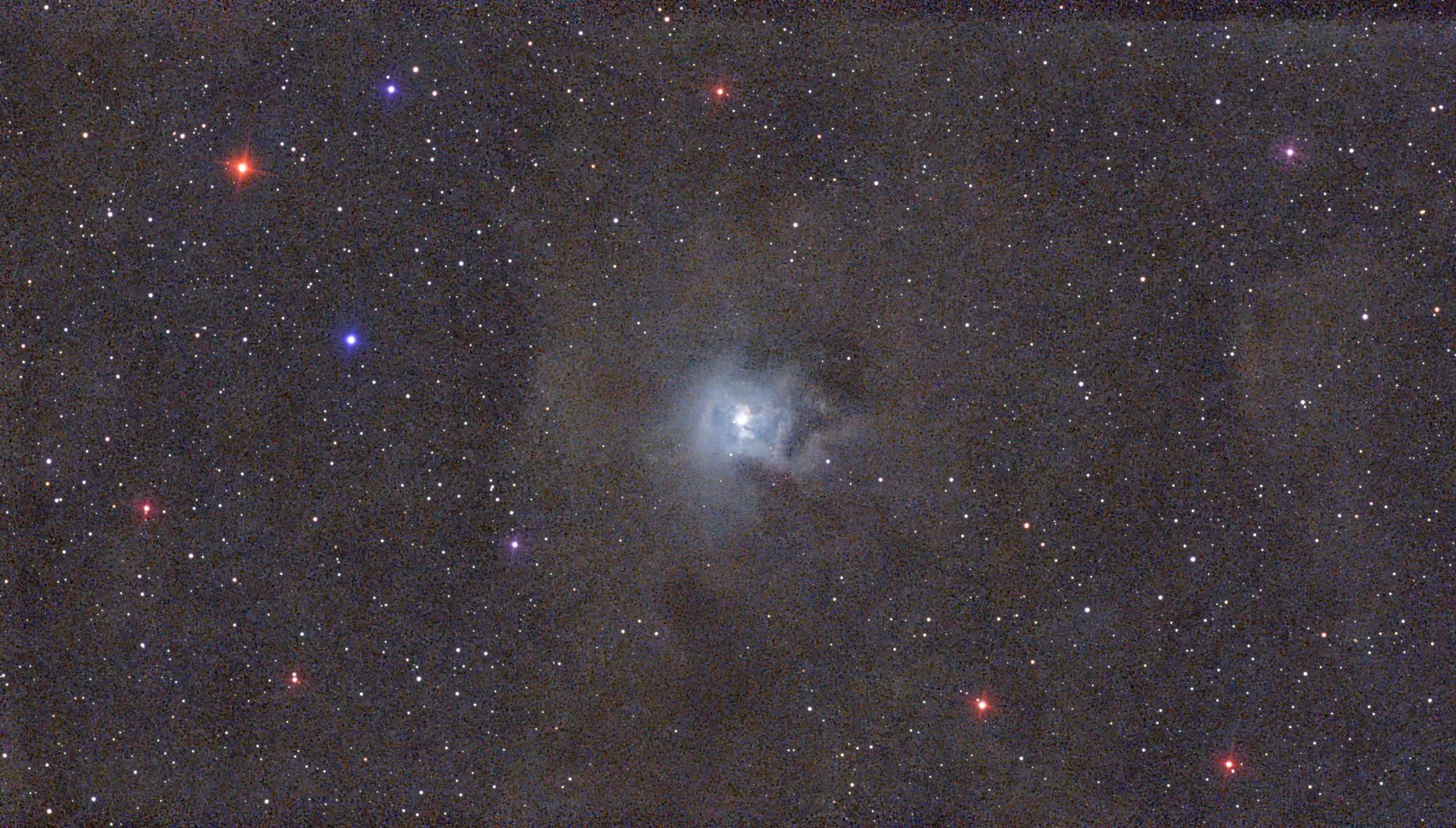
It’s a reflection nebula 1,300 light years away and 6 light years across, illuminated by the central star HD 200775.
Surrounding the bluish nebula are complex brownish clouds of interstellar material. These are of interest because they have been found to contain buckminsterfullerene, a large organic molecule consisting of 60 carbon atoms arranged in a sphere (it looks much like the panels in a football).
The surrounding clouds are faint and difficult to image, and more exposures would bring them out better.
The bright reddish star at top left is T Cephei, a very large red giant which would engulf the orbit of Mars if it was placed where the Sun is. It’s a Mira-class variable star with a period of 385 days, varying between magnitude 11.3 (invisible to the eye) and 5.2 (just visible) — here it’s about 7.3 and is approaching its next maximum brightness in November 2026.
Details:
Target: C 4 (Iris Nebula, NGC 7023)
Equipment: Dwarf Mini, Astro filter, perfect EQ
Time: 2026-08-23 21:25-23:57
Integration: 2hrs 18mins (138×60secs, +2 failures), gain 60
Conditions: Clear, Bortle 6
Processing: PhotoDesk equalisation, gamma, usm
And so to bed…
Pleiades, Improved
August 22. The sky cleared after 2am so I managed to catch the Pleiades again, and here’s a megastack of the two sessions:
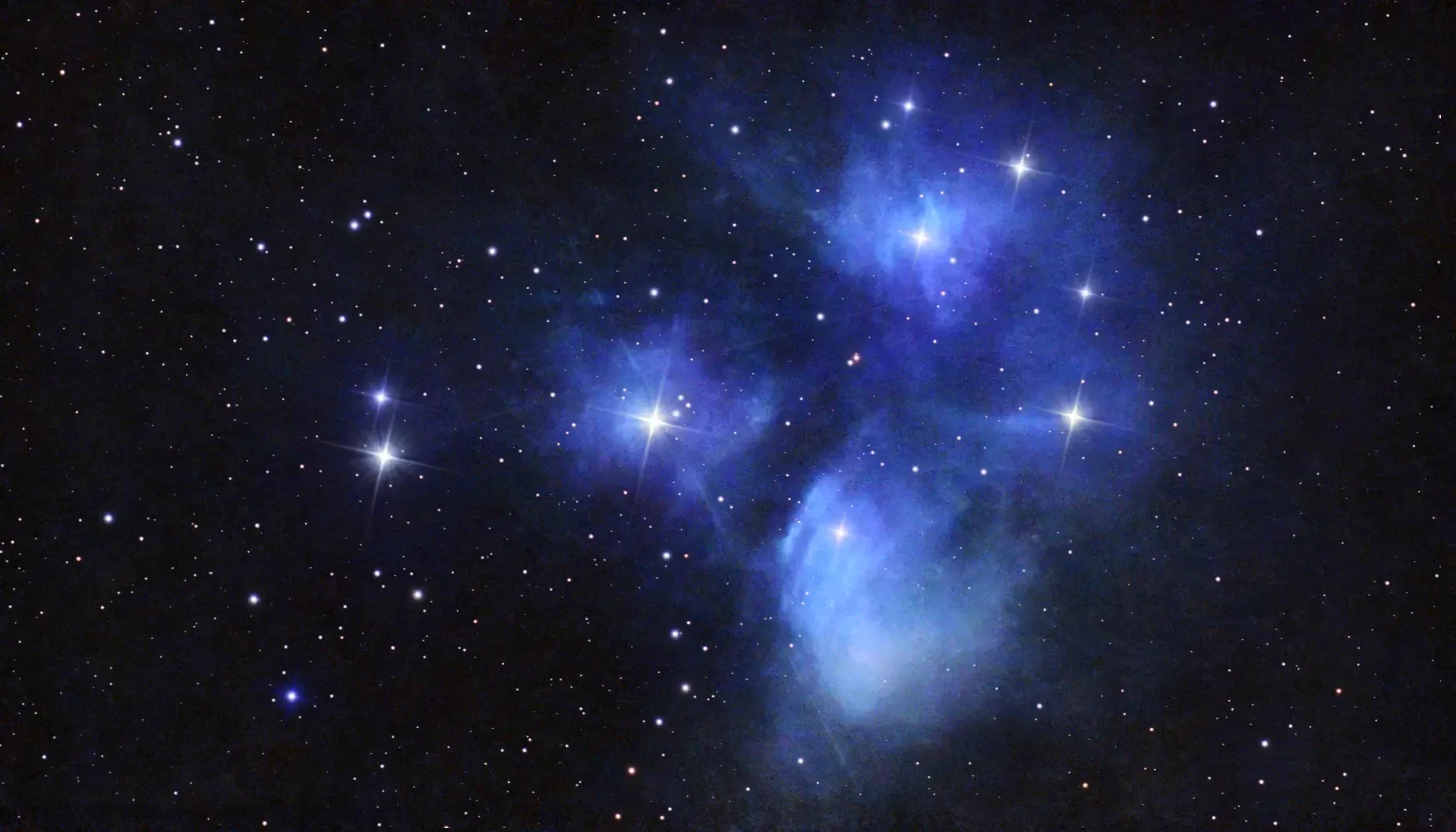
Much improved, particularly the nebulosity around Alcyone in the centre of the image. The Mini managed to miss a satellite trail passing through it though.
Details:
Target: M 45 (The Pleiades)
Megastack session 1:
Equipment: Dwarf Mini, Astro filter, perfect EQ
Time: 2026-08-15 02:35..04:16
Integration: 1hr 12mins (163×30secs, +5 failures), gain 40
Conditions: Clear; Bortle 6
Megastack session 2:
Equipment: Dwarf Mini, Astro filter, perfect EQ
Time: 2026-08-23 02:39..04:19
Integration: 1hr 12mins (164×30secs, +3 failures), gain 50
Conditions: Slightly hazy, clearing; Bortle 6
Total integration: 2hrs 24mins
Processing: PhotoDesk equalisation, gamma
And so to bed…
Stephan’s Quintet, and California Nebula
August 21. There’s been a run of cloudy nights recently, but despite a bad forecast for tonight it stayed clear until about 3am.
A new target first, and a hard one. The galaxy C 30 in Pegasus, and the nearby Stephan’s Quintet:
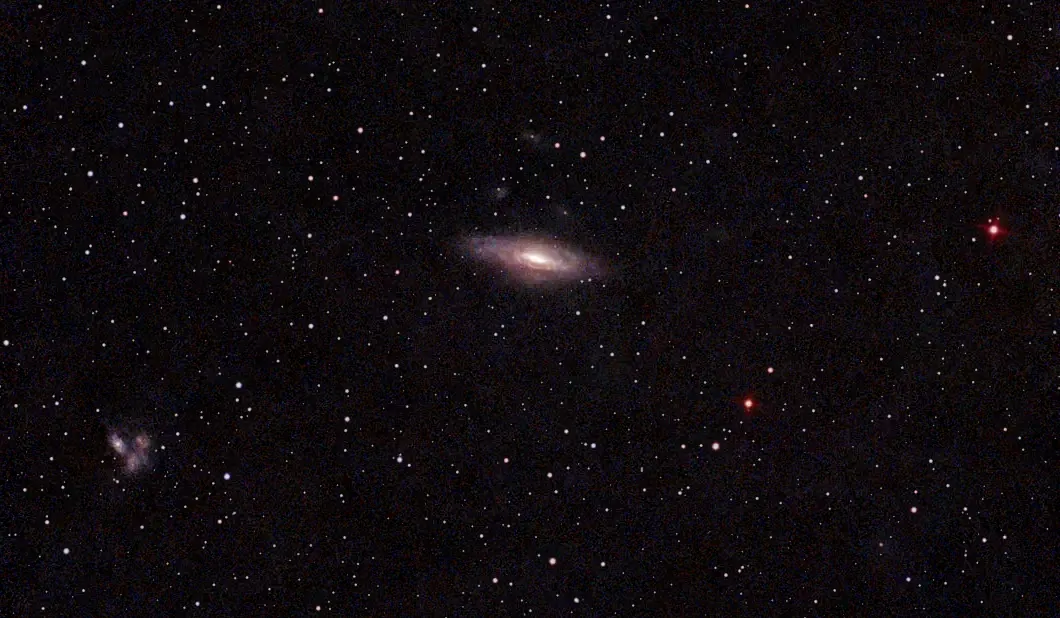
C 30 is an unbarred spiral galaxy, and unusually the bright core is rotating in the opposite direction to the main spiral arms. Faintly visible above it are some of the “fleas”, a group of unconnected and much more distant galaxies. It’s also known, oddly, as the Deer Lick Group, apparently after the Deerlick Gap in North Carolina — hence the “fleas” monicker, I imagine.
Stephan’s Quintet, a grouping of galaxies, is at lower left. It looks like three galaxies here — the lower one is actually a pair of interacting galaxies, while the fifth is very faint and just below the main group; it’s not really visible in this image, and anyway is not physically connected to the main grouping.
This target needs many more exposures and some extensive processing to bring out more detail.
Details:
Target: C 30 (NGC 7331)
Equipment: Dwarf Mini, Astro filter, perfect EQ
Time: 2026-08-21 21:36..01:08
Integration: 3hrs (180×60secs, +12 failures), gain 80
Conditions: Clear, Bortle 6
Processing: PhotoDesk equalisation, gamma, crop
Next up was a first go at the California Nebula:
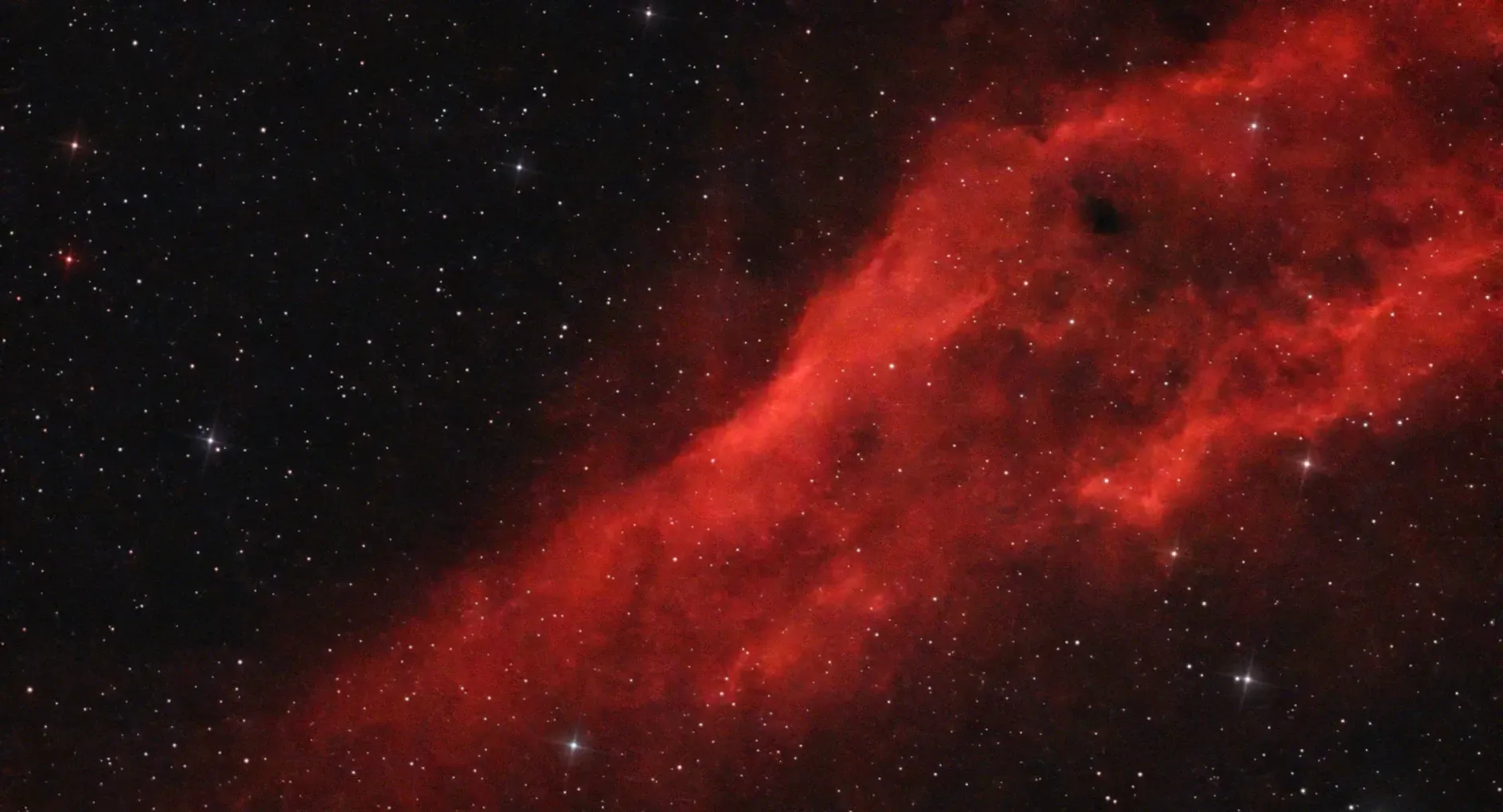
Does it look much like California? Well, perhaps … it looks more like the head of a crocodile to me. Its official name is NGC 1499, and it’s an emission nebula in Perseus. The red H-alpha glow is caused by the highly energetic star Menkib, Xi Persei, just off-screen at bottom right.
Details:
Target: NGC 1499 (California Nebula)
Equipment: Dwarf Mini, Duo-Band filter, perfect EQ
Time: 2026-08-22 01:27..02:20
Integration: 50mins (50×60secs, no failures), gain 80
Conditions: Clear, Bortle 6
Processing: PhotoDesk equalisation, gamma
Finally I tried the Pleiades again, but unfortunately the clouds started moving in so the shoot was abandoned.
And so to bed…