Veils, Rings and Moons
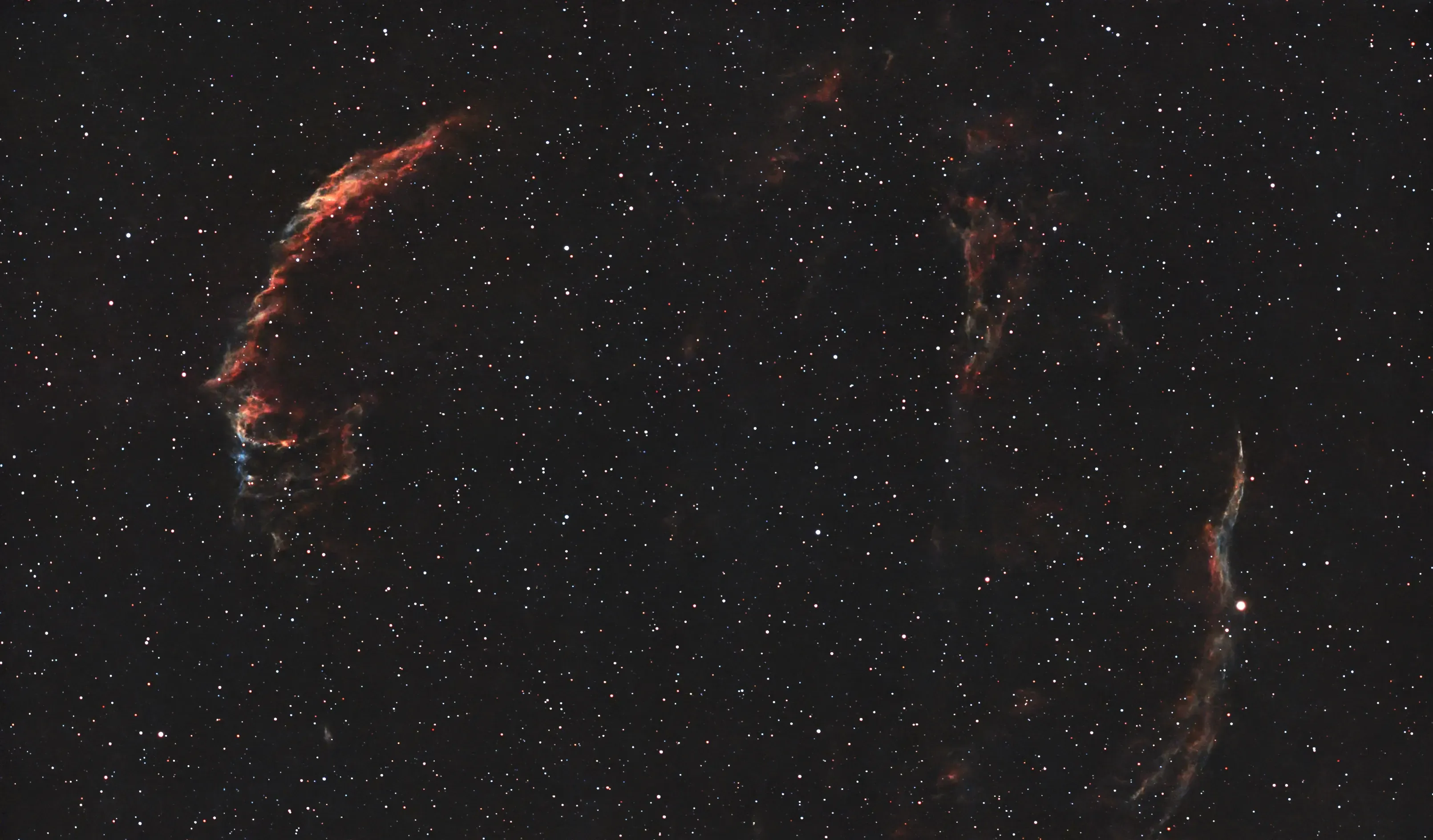
May 25/26, and another lovely clear night. This time I didn’t stay up, but programmed a session with two targets: M57 again, the Ring Nebula in Lyra from 11pm to 1am, and a mosaic of the Veil Nebulas C33 and C34, which are parts of a large complex called the Cygnus Loop; 1am to 3:30am. This is the remnant of a supernova that exploded about 8,000 years ago. The parts shown here are the Eastern Veil on the left, aka NGC 6992, and the Western Veil on the right, aka the Witch’s Broom; collectively aka Filamentary Nebulae. The fainter bit at top right centre is Pickering’s Triangle. Click for enlarged view.
Details:
Target: C33,C34; 4-frame mosaic
Equipment: Dwarf Mini, Duo-Band filter
Integration: 39mins/frame (77×30secs, 3 failures; total 228 frames), gain 60
Conditions: Clear, Bortle 7
Processing: PhotoDesk equalisation, gamma
This ideally needs longer than 40 minutes per frame to get a better result, but it’s difficult at this time of year, with short nights.
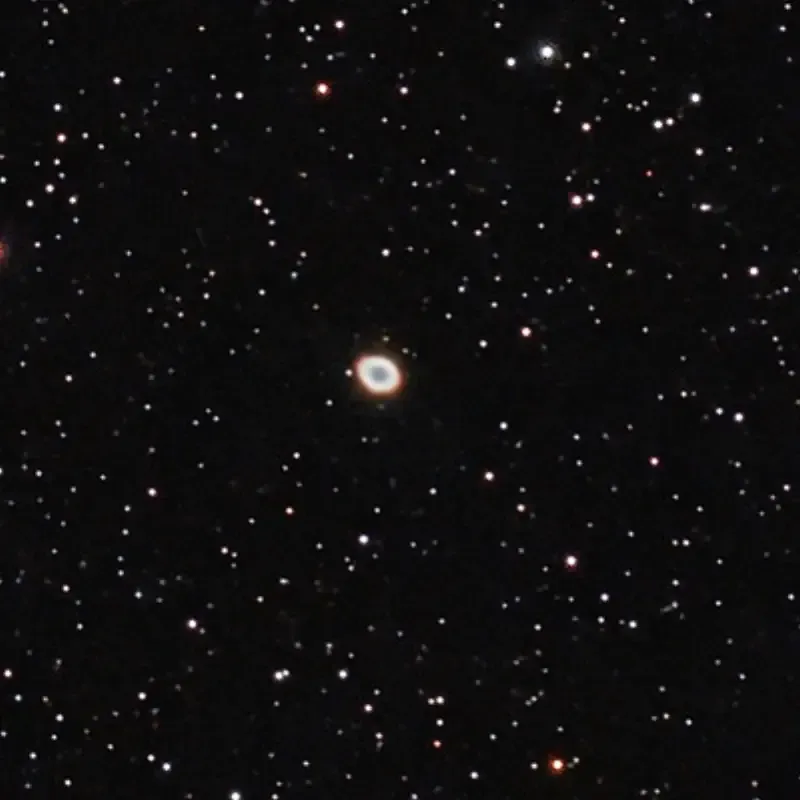
Here’s a megastack of the Ring Nebula, combining the shots taken last night with those from 25 April:
Details:
Target: M57 megastack
Equipment: Dwarf Mini, Duo-Band filter
Integration: 2hrs 30mins (300×30secs, 3 failures), gain 60
Conditions: Clear, Bortle 7
Processing: PhotoDesk equalisation, gamma, x2 scaling
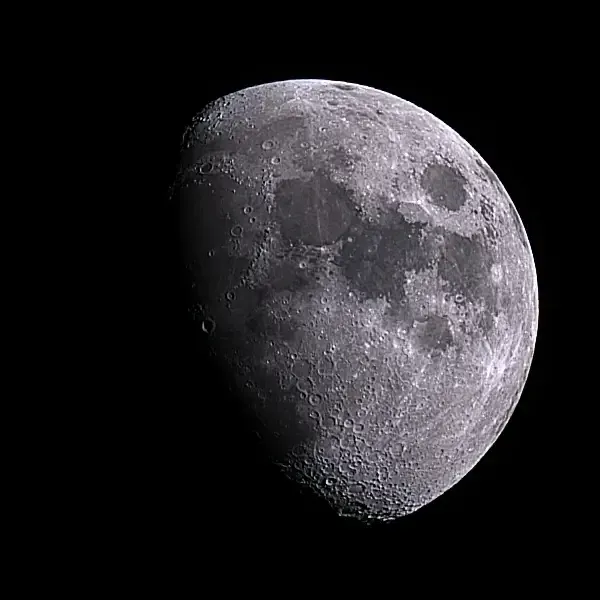
And finally, the Moon:
Crescent Nebula, and the Milky Way
May 24/25, and the first clear night for over three weeks — with a few more to come, hopefully.
The summer is approaching, and with it comes the Summer Triangle of Deneb, Vega and Altair, the three brightest stars in Cygnus, Lyra and Aquila respectively. Cygnus is especially interesting due to the number of nebulae in the area and a fairly bright section of the Milky Way. So here’s Caldwell 27, aka NGC 6888, aka the Crescent Nebula:
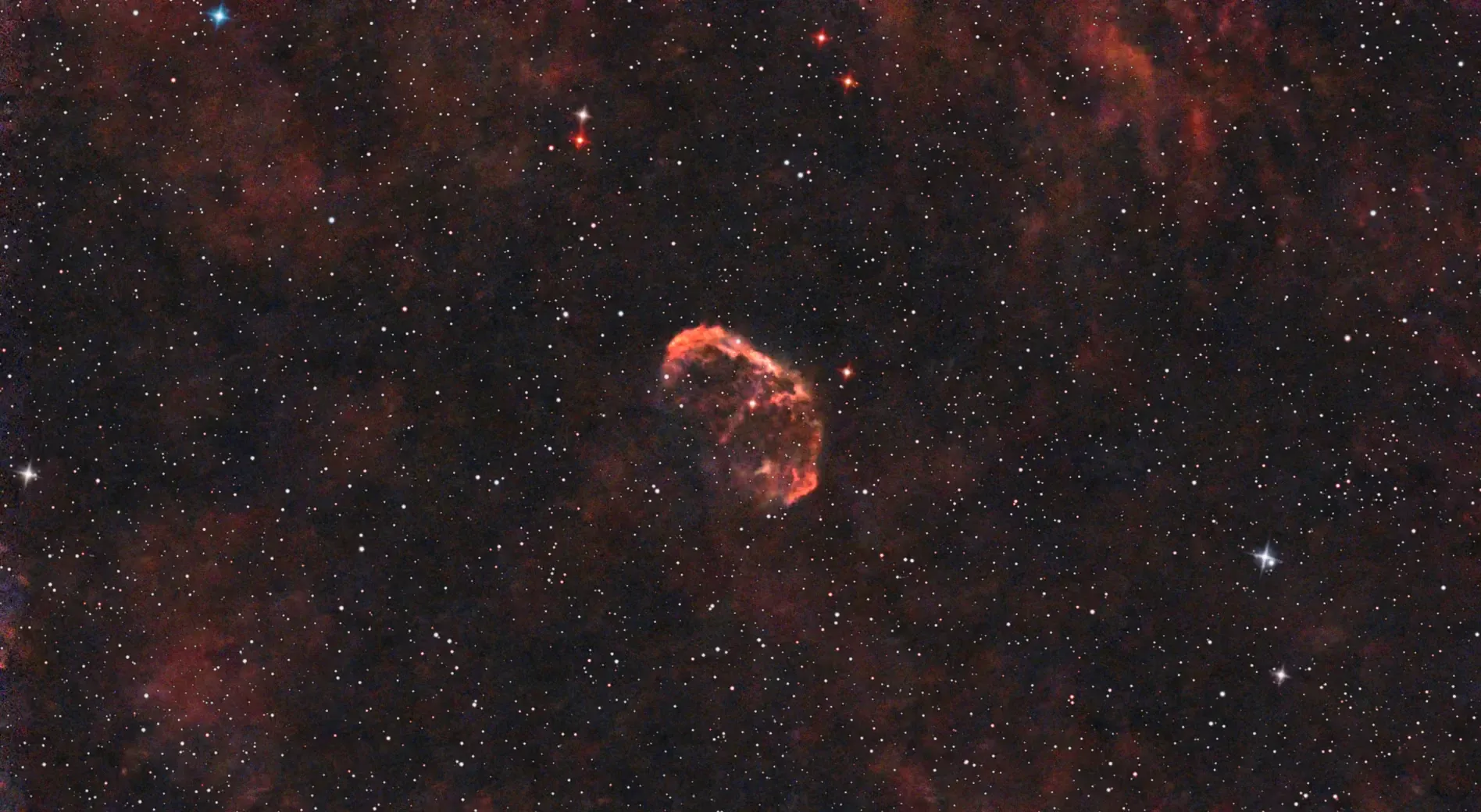
This emission nebula is just below Sadr, the central star of Cygnus. The star in the centre is WR 136, which about 120,000-240,000 years ago became a red supergiant and threw off the material that became the nebula. It’s expected to explode in a supernova at some point.
The area around Cygnus is rich in nebulosity, some of which can be seen here.
Details:
Target: C27
Equipment: Dwarf Mini, Duo-Band filter
Integration: 1hr 9mins (69×60secs, 1 failure), gain 60
Conditions: Clear, Bortle 7
Processing: PhotoDesk equalisation, gamma
I also tried out the new Milky Way setting on the Mini, with rather poor results. It seems you need properly dark skies for this to work well. And I clearly didn’t give it long enough.
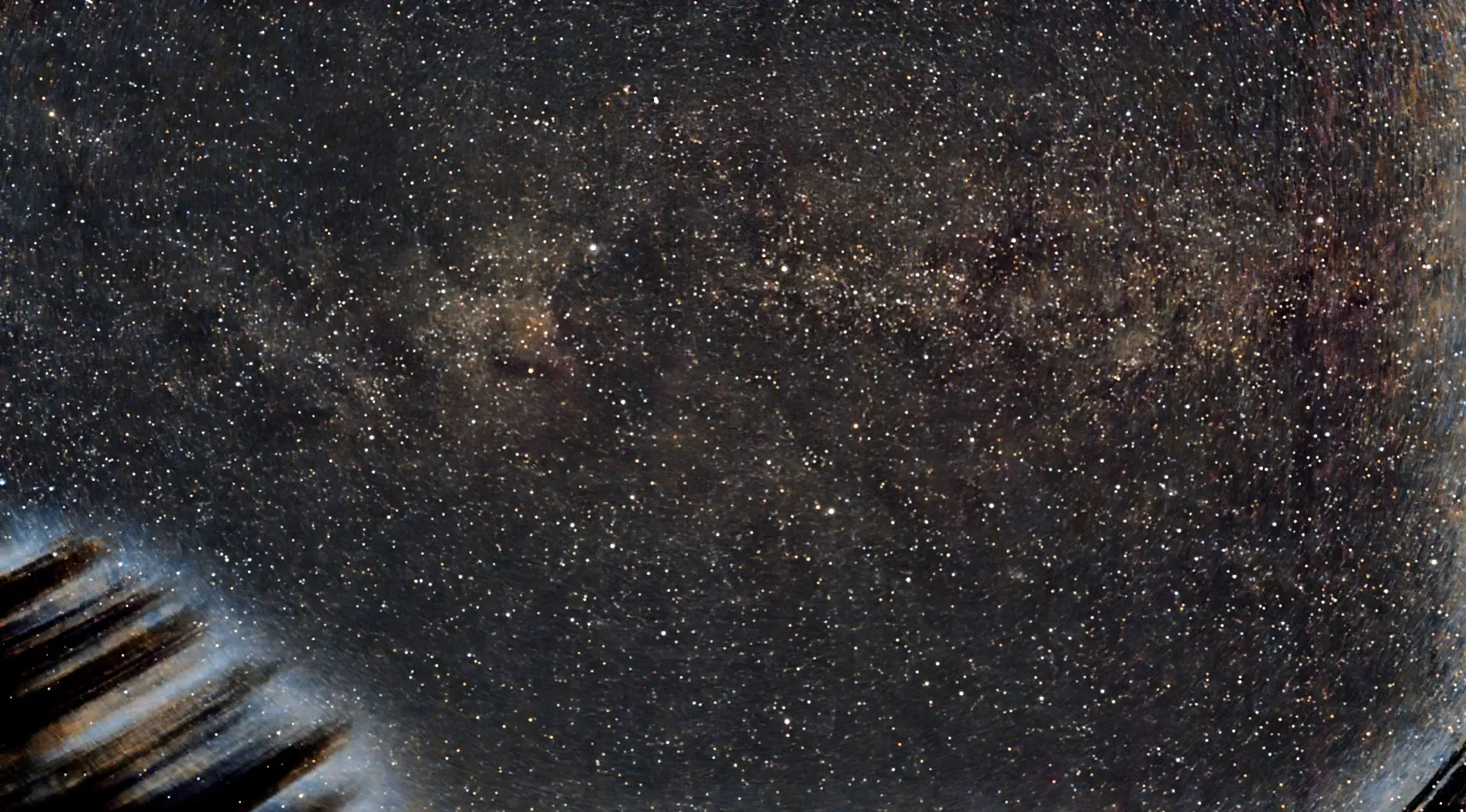
Details:
Target: Milky Way, Cygnus area
Equipment: Dwarf Mini
Integration: 33mins (201×10secs, no failures), gain 40
Conditions: Clear, Bortle 7
Processing: PhotoDesk equalisation, gamma
The smear on the left is a tree, and there’s obvious light pollution on the right.
PhotoDesk Workflow for the Dwarf Mini
Now I’ve had the Dwarf Mini for a while I’ve developed a few methods to process the images using PhotoDesk, and here I’ll run through one possible approach. Processing astronomical images is always a balance between accuracy and aesthetics, but the most important thing is to preserve as much data as possible without adding too much (ideally, anything!).
The Mini produces a number of files for each observing session. Most importantly you have access to the raw data, with each shot — often hundreds of them — saved by default in FITS format (you can get them as TIFFs if you so choose). These contain 16-bit data which is unaligned, and undemosaiced1. They’re currently not really usable under RISC OS, unfortunately, though hopefully that will change2 .
But you also get aligned, demosaiced and stacked versions of the data in the form of high-quality PNG and FITS files — and, for our purposes, as a JPEG. It’s not ideal working with JPEGs, but it’s what I’m stuck with at the moment. And you can get pretty good results with some careful processing.
C20, M106 and new features
The last clear night for a while according to the forecast, so I decided to attempt scheduled shooting for the first time, and try out a mosaic. The Mini lets you program an observing session in advance, with one or more objects, and each can use the mosaic feature which stitches together up to four fields of view into a single image.
The target was C20, aka the North American nebula in Cygnus; it’s obvious why this very large area of nebulosity is so named. This is really a summer object at my location, but as we’re now in May it becomes visible after 2am or so. I wasn’t going to stay up that late, so programmed a schedule to start at 2:00am and continue shooting until 4:30am, when it would start to become lighter. At 11pm I put the scope on a tripod outside with a battery plugged in, set up a perfect equatorial mount, and synchronised the schedule. Then I went to bed. A bit nervously!
So at 2:00am the scope woke itself up, and took 225×30 second exposures at gain 60 with the Duo-Band filter. And here’s the result:
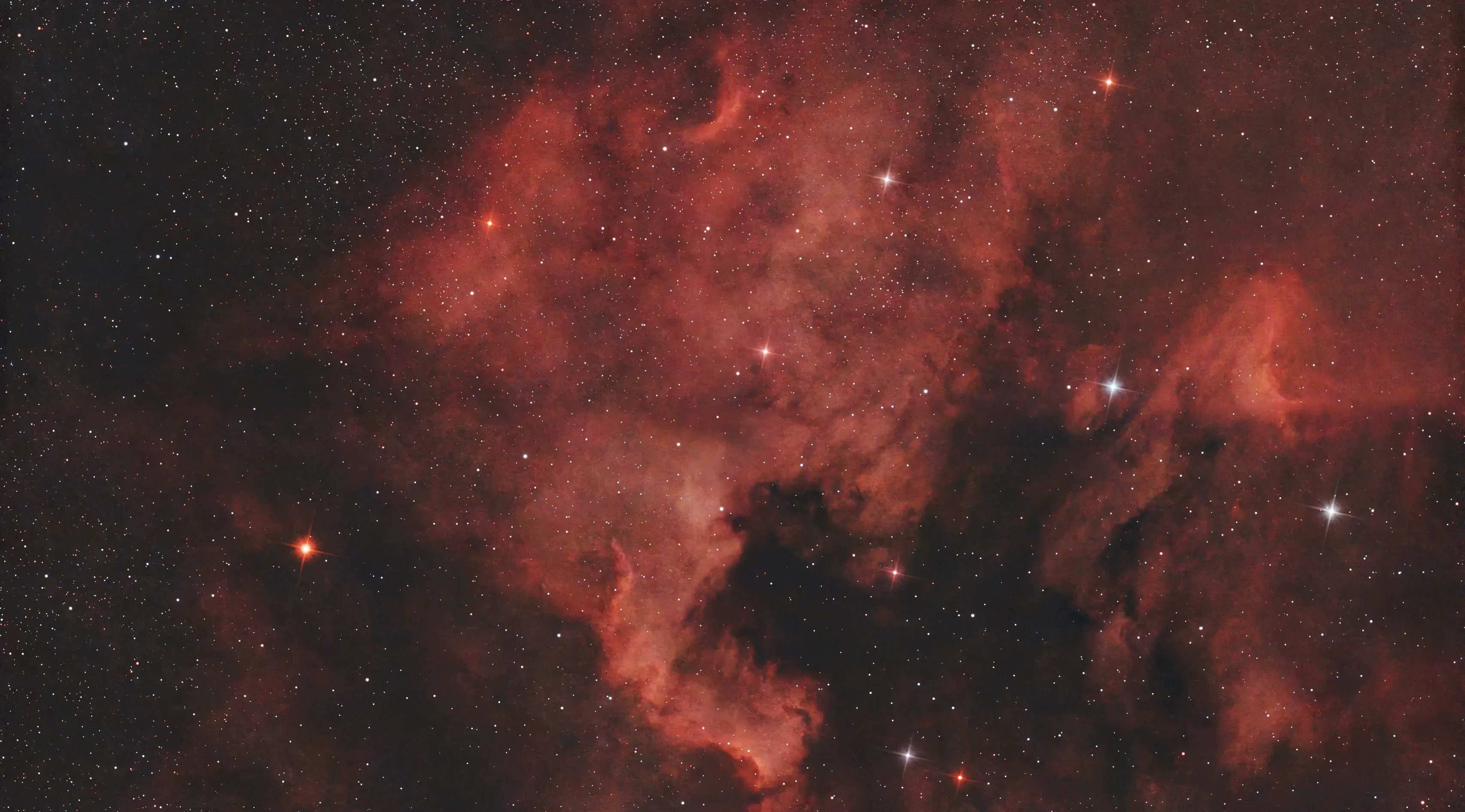
Click for (much!) bigger. It’s been lightly processed in PhotoDesk (gamma adjustment), and the Mini has added ’spikes’ to the brighter stars (a new feature in the latest upgrade) to simulate a more usual astro photo. Star spikes are caused by diffraction around the mountings for the secondary mirror in many telescopes — including the Hubble, incidentally.
The stitching together isn’t quite perfect; there’s a visible discontinuity in the lower right quadrant. Better processing would mitigate this.
I actually started the session at about 10pm, and to check that everything was working properly I imaged M106 again. Here’s a Mega Stack of last night’s result with the images I took on 6 April:
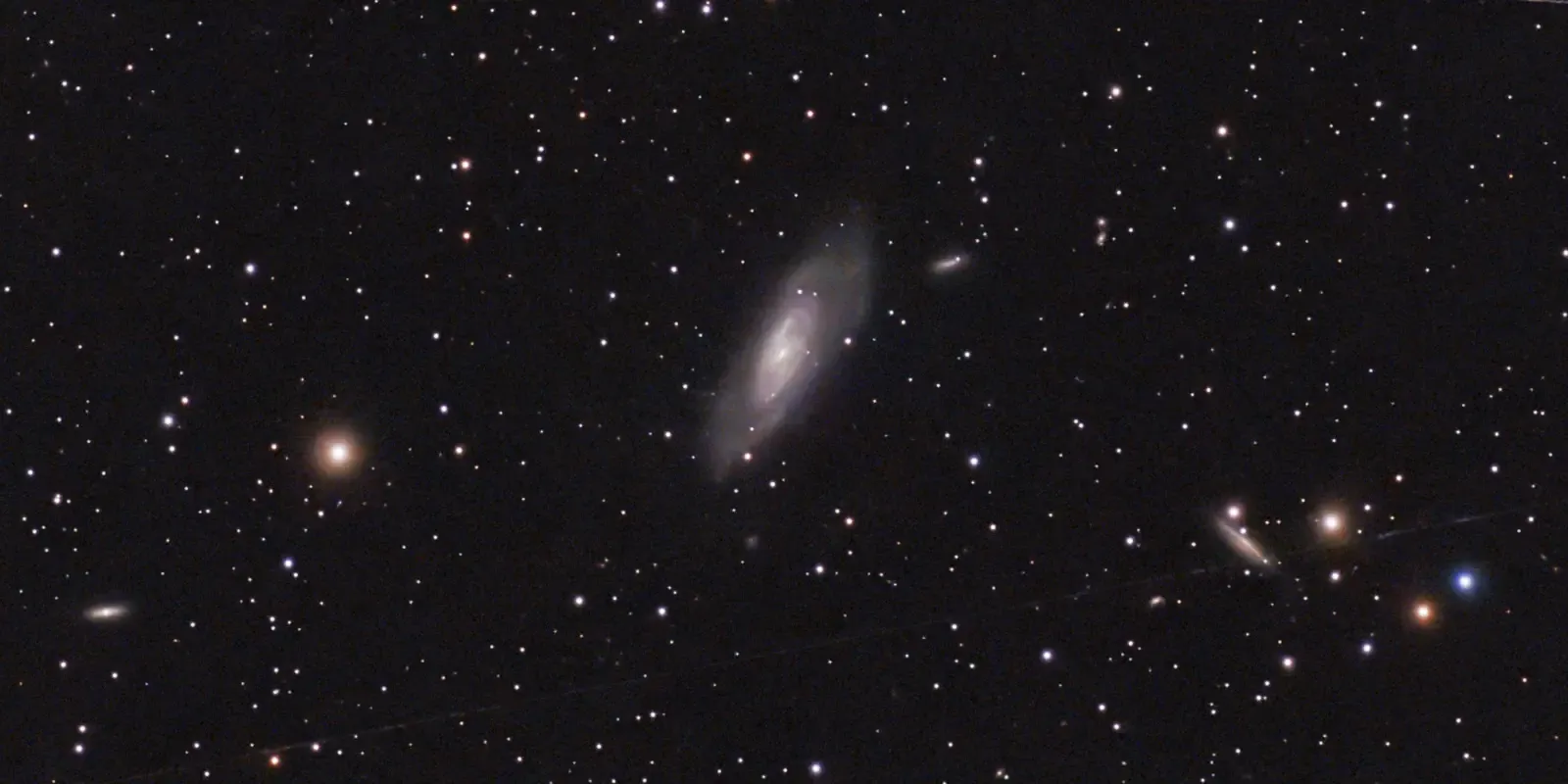
It’s been lightly gamma processed in PhotoDesk and cropped to remove some satellite trails — the Mini’s removal of these shots isn’t 100% accurate.