C20, M106 and new features
The last clear night for a while according to the forecast, so I decided to attempt scheduled shooting for the first time, and try out a mosaic. The Mini lets you program an observing session in advance, with one or more objects, and each can use the mosaic feature which stitches together up to four fields of view into a single image.
The target was C20, aka the North American nebula in Cygnus; it’s obvious why this very large area of nebulosity is so named. This is really a summer object at my location, but as we’re now in May it becomes visible after 2am or so. I wasn’t going to stay up that late, so programmed a schedule to start at 2:00am and continue shooting until 4:30am, when it would start to become lighter. At 11pm I put the scope on a tripod outside with a battery plugged in, set up a perfect equatorial mount, and synchronised the schedule. Then I went to bed. A bit nervously!
So at 2:00am the scope woke itself up, and took 225×30 second exposures at gain 60 with the Duo-Band filter. And here’s the result:
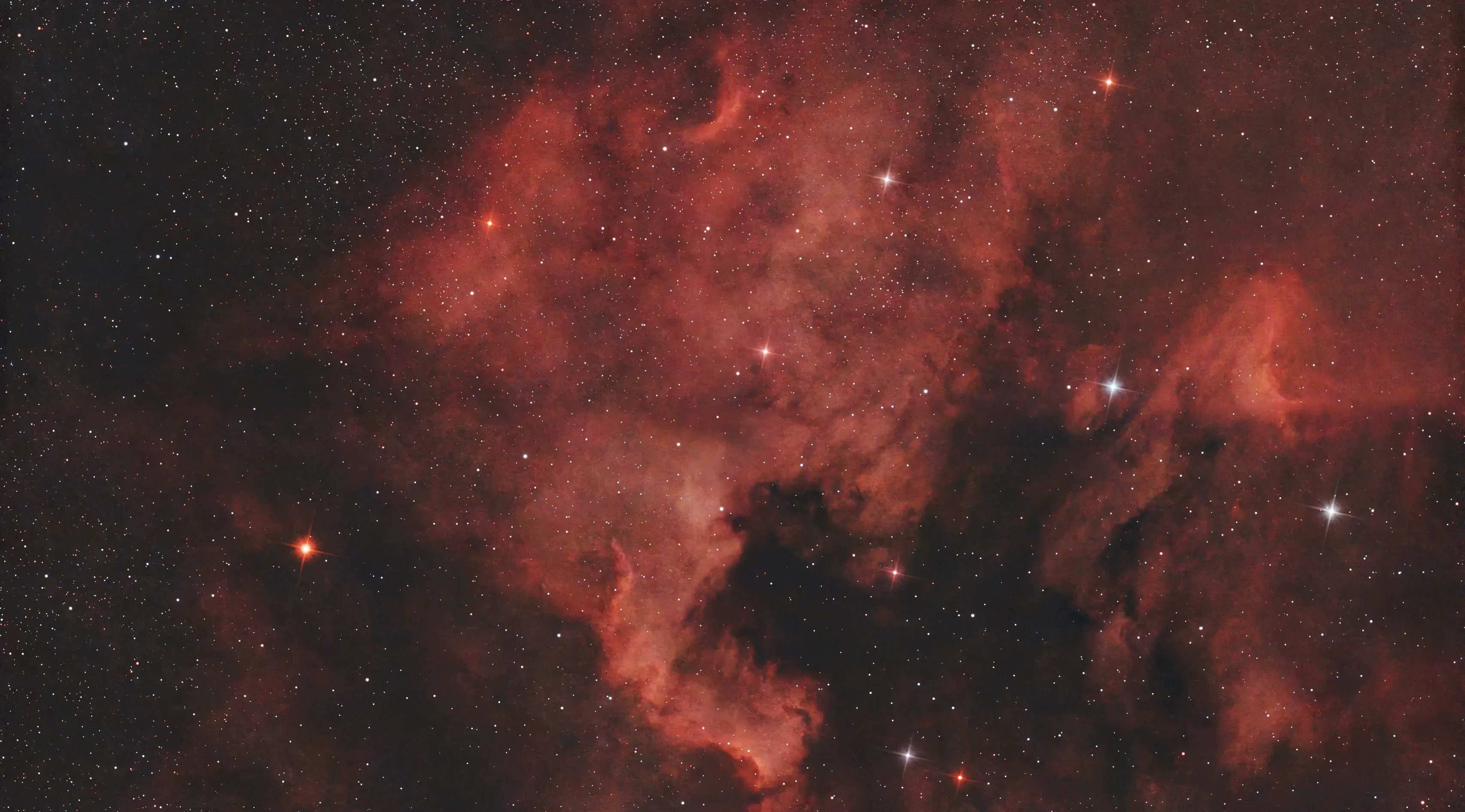
Click for (much!) bigger. It’s been lightly processed in PhotoDesk (gamma adjustment), and the Mini has added ’spikes’ to the brighter stars (a new feature in the latest upgrade) to simulate a more usual astro photo. Star spikes are caused by diffraction around the mountings for the secondary mirror in many telescopes — including the Hubble, incidentally.
The stitching together isn’t quite perfect; there’s a visible discontinuity in the lower right quadrant. Better processing would mitigate this.
I actually started the session at about 10pm, and to check that everything was working properly I imaged M106 again. Here’s a Mega Stack of last night’s result with the images I took on 6 April:
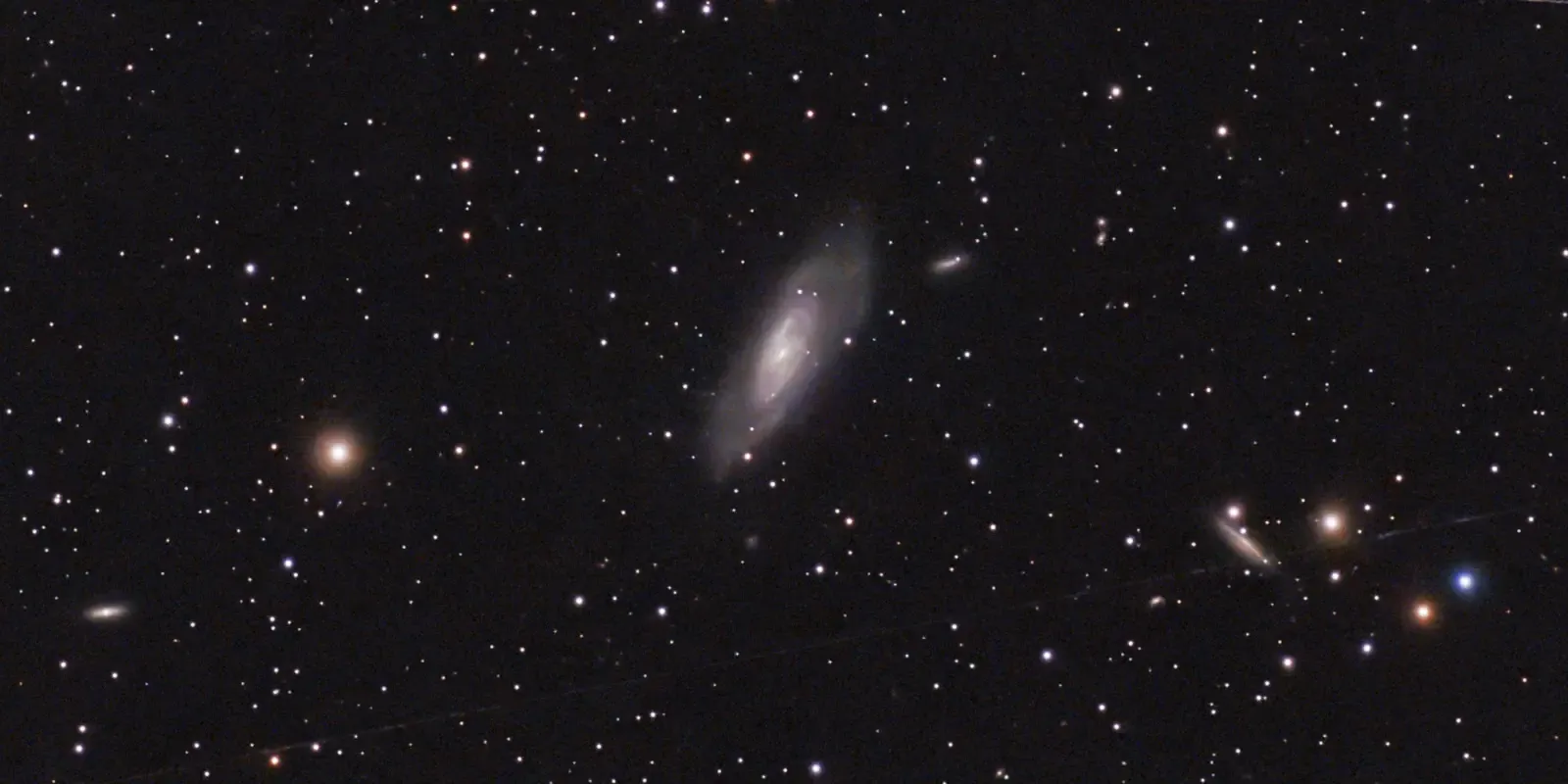
It’s been lightly gamma processed in PhotoDesk and cropped to remove some satellite trails — the Mini’s removal of these shots isn’t 100% accurate.
Add comment
Fill out the form below to add your own comments