Crescent Nebula, and the Milky Way
May 24/25, and the first clear night for over three weeks — with a few more to come, hopefully.
The summer is approaching, and with it comes the Summer Triangle of Deneb, Vega and Altair, the three brightest stars in Cygnus, Lyra and Aquila respectively. Cygnus is especially interesting due to the number of nebulae in the area and a fairly bright section of the Milky Way. So here’s Caldwell 27, aka NGC 6888, aka the Crescent Nebula:
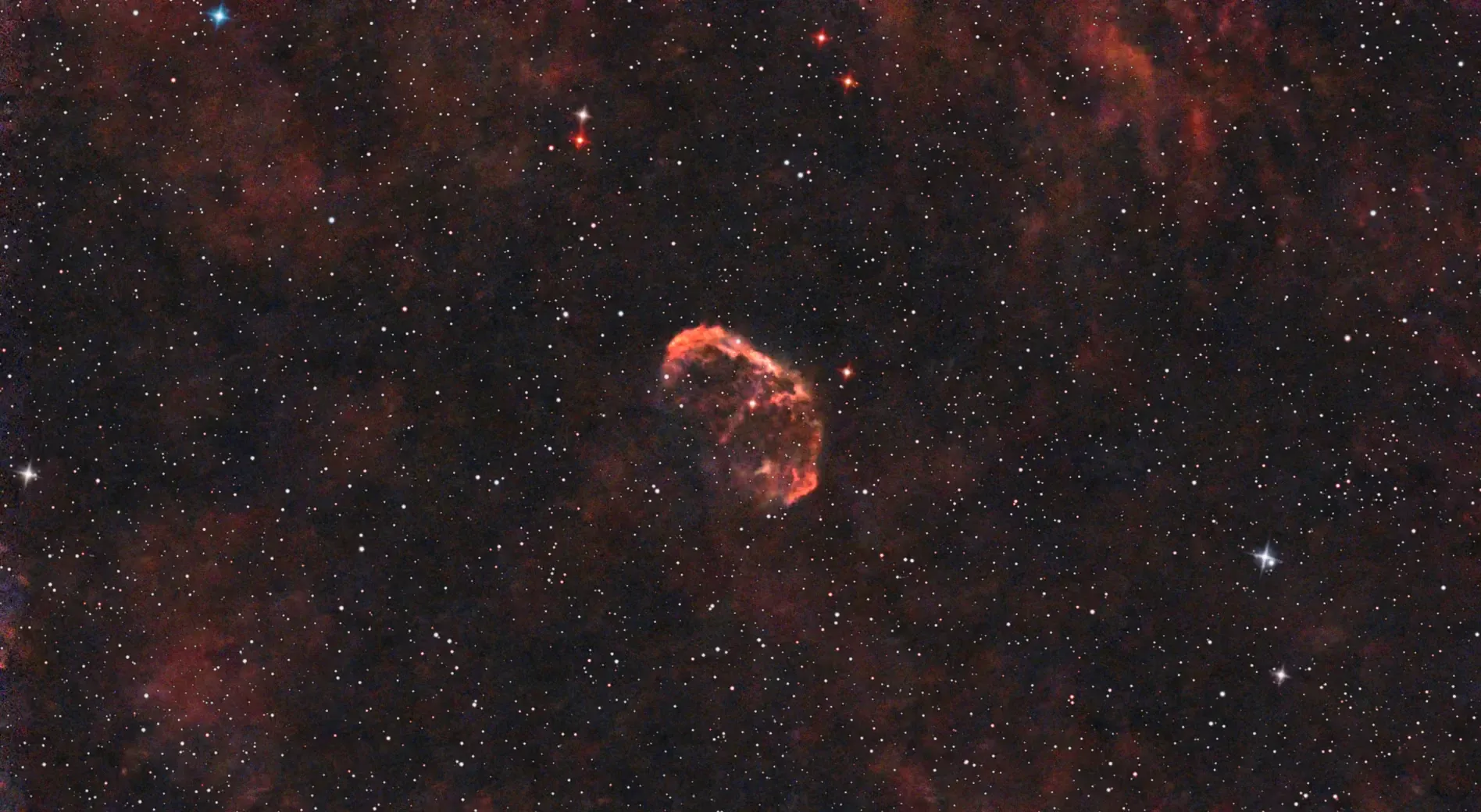
This emission nebula is just below Sadr, the central star of Cygnus. The star in the centre is WR 136, which about 120,000-240,000 years ago became a red supergiant and threw off the material that became the nebula. It’s expected to explode in a supernova at some point.
The area around Cygnus is rich in nebulosity, some of which can be seen here.
Details:
Target: C27
Equipment: Dwarf Mini, Duo-Band filter
Integration: 1hr 9mins (69×60secs, 1 failure), gain 60
Conditions: Clear, Bortle 7
Processing: PhotoDesk equalisation, gamma
I also tried out the new Milky Way setting on the Mini, with rather poor results. It seems you need properly dark skies for this to work well. And I clearly didn’t give it long enough.
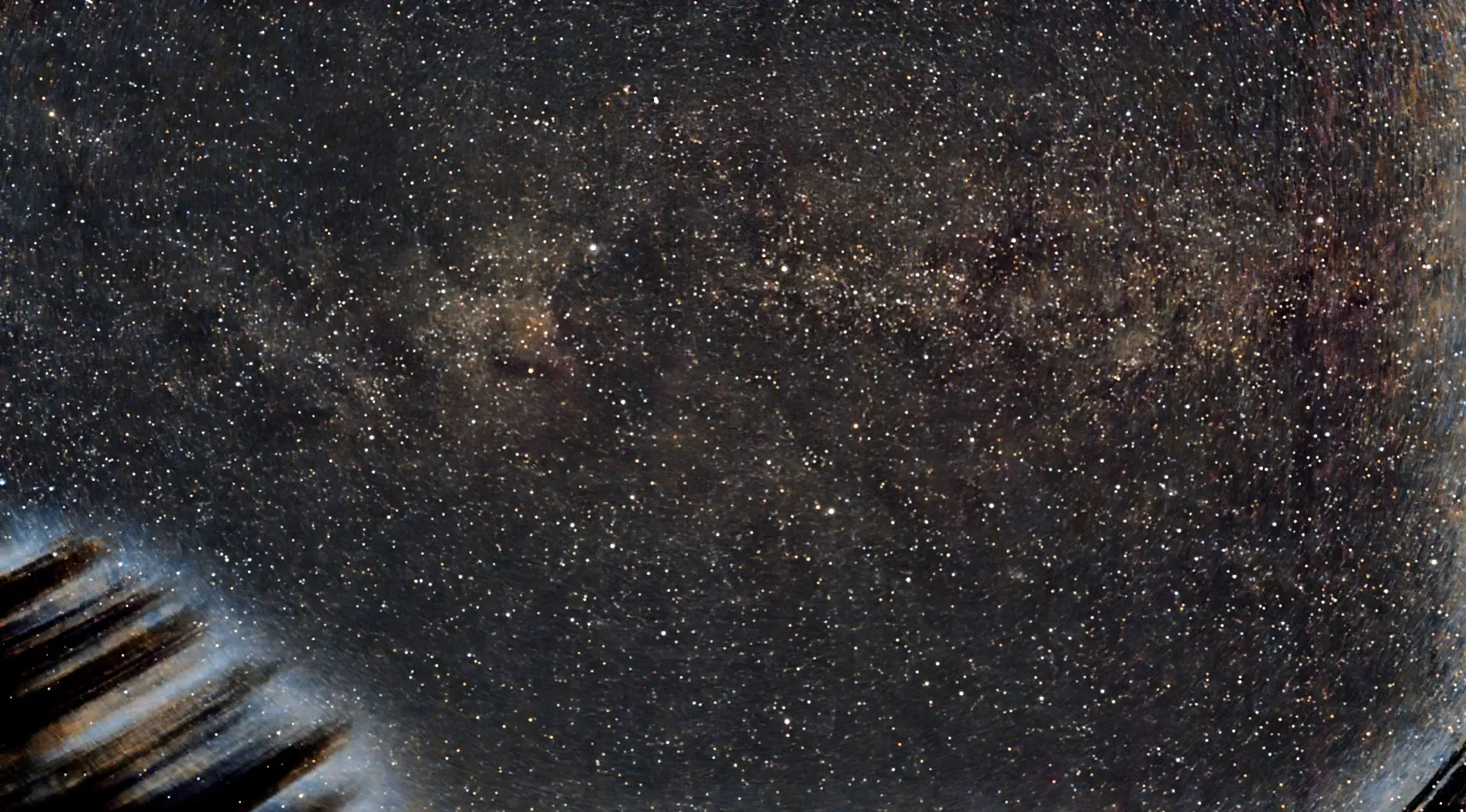
Details:
Target: Milky Way, Cygnus area
Equipment: Dwarf Mini
Integration: 33mins (201×10secs, no failures), gain 40
Conditions: Clear, Bortle 7
Processing: PhotoDesk equalisation, gamma
The smear on the left is a tree, and there’s obvious light pollution on the right.