A Big Day!
August 12, a big day for astronomy here. A solar eclipse, a meteor shower, various galaxies, and first up, Comet 220P/McNaught. This is an overlay of the images taken on 11 and 12 August, showing how much the comet has moved in 25 hours:
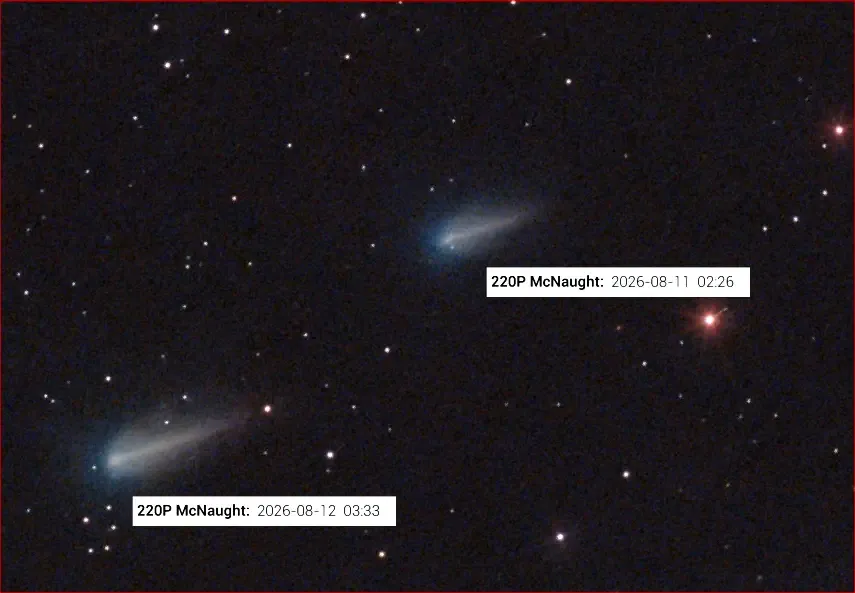
The times are of the first frame in each case. The comets themselves look a bit different because they had different exposures, gains and mounts (which meant one had to be rotated to align the stars).
Comet 220P/McNaught is periodic, and orbits between Mars and Jupiter every 5.5 years. It’s normally pretty faint at magnitude 17 (probably too faint for the Mini to image), but on 31 May and 5 August this year there were two outbursts when the comet was closest to the Sun. These increased the brightness by 8,000 times, to magnitude 7 or so.
And now, the partial solar eclipse. In Leeds this ran from 18:12 to 20:03, with the maximum coverage of 92% of the Sun at 19:09.
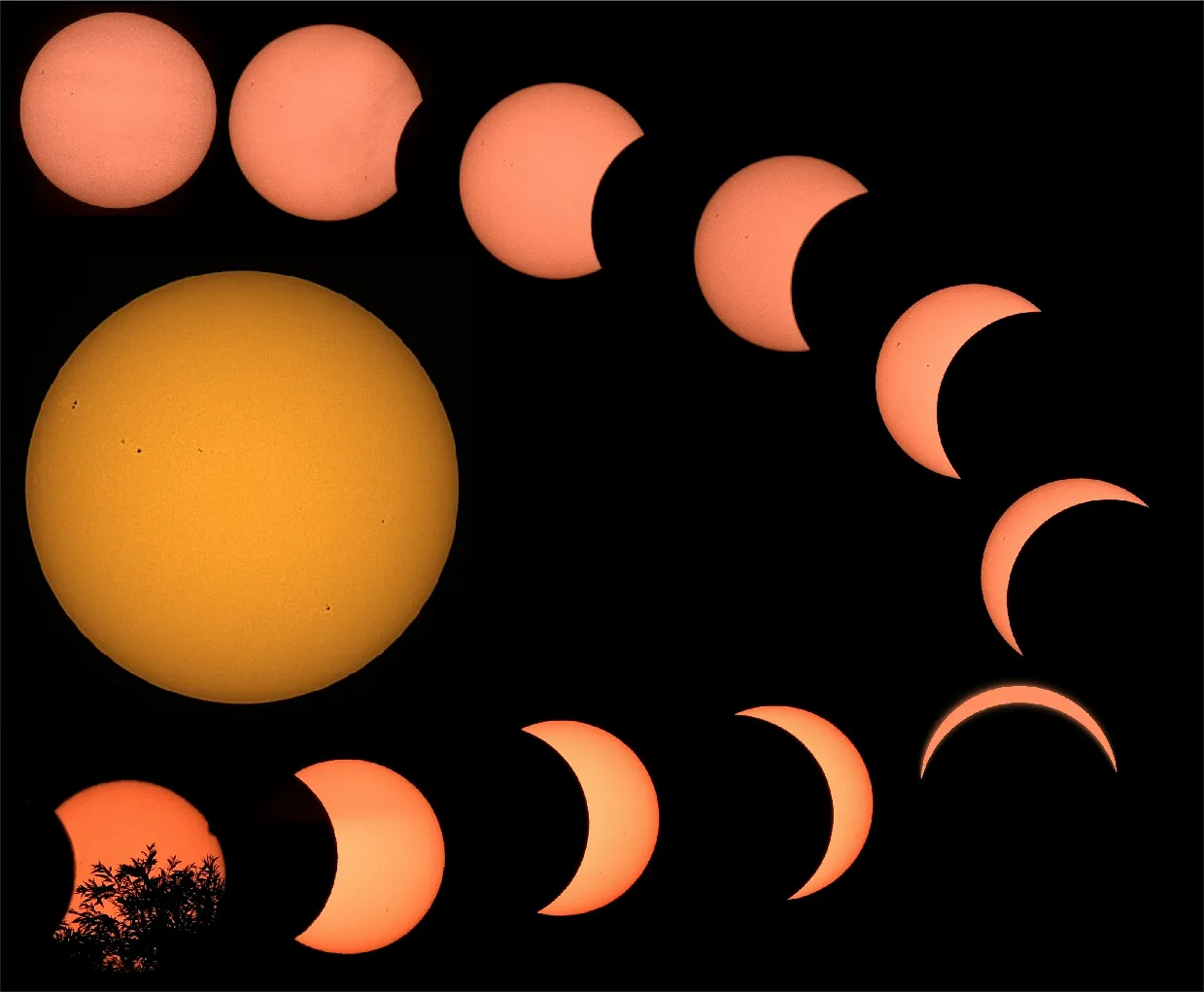
Here I’ve montaged a selection of the 430 pictures the Mini took, using its Burst mode of a photo every 15 seconds. As I couldn’t get off work I had to set the scope up on the roof of the library (with permission!) and set it running during my break.
The final montage image shows the Sun disappearing behind the roof garden of a local pub; I wasn’t able to get the last stages of the eclipse. The central image is a higher resolution picture of the Sun taken at quarter to six, just before the main shoot started. Sadly there are only a few small sunspots.
Here’s the video:
There were a couple of minor problems. The focus went a bit off at one point (probably due to the Mini running very hot at over 50°), but you can refocus during Burst mode so could be fixed; you can see this happening at about 8 seconds. And at about 19:15 I noticed that the Sun (still being eclipsed) was about to disappear behind a building, so I halted the shoot, moved the camera and restarted capturing. I only lost about 2 minutes, so not a disaster.
The video was built by ffmpeg from the 430 jpegs emitted by the Burst mode. Some images — only 4 — were badly tracked, so were replaced by adjacent photos. The whole sequence was then stabilised (using the incredibly capable ffmpeg again), and reduced to 800 pixels wide for displaying here.
Later was the maximum of the annual Perseids meteor shower. Here’s a star trails covering 4 hours from about 11:30:
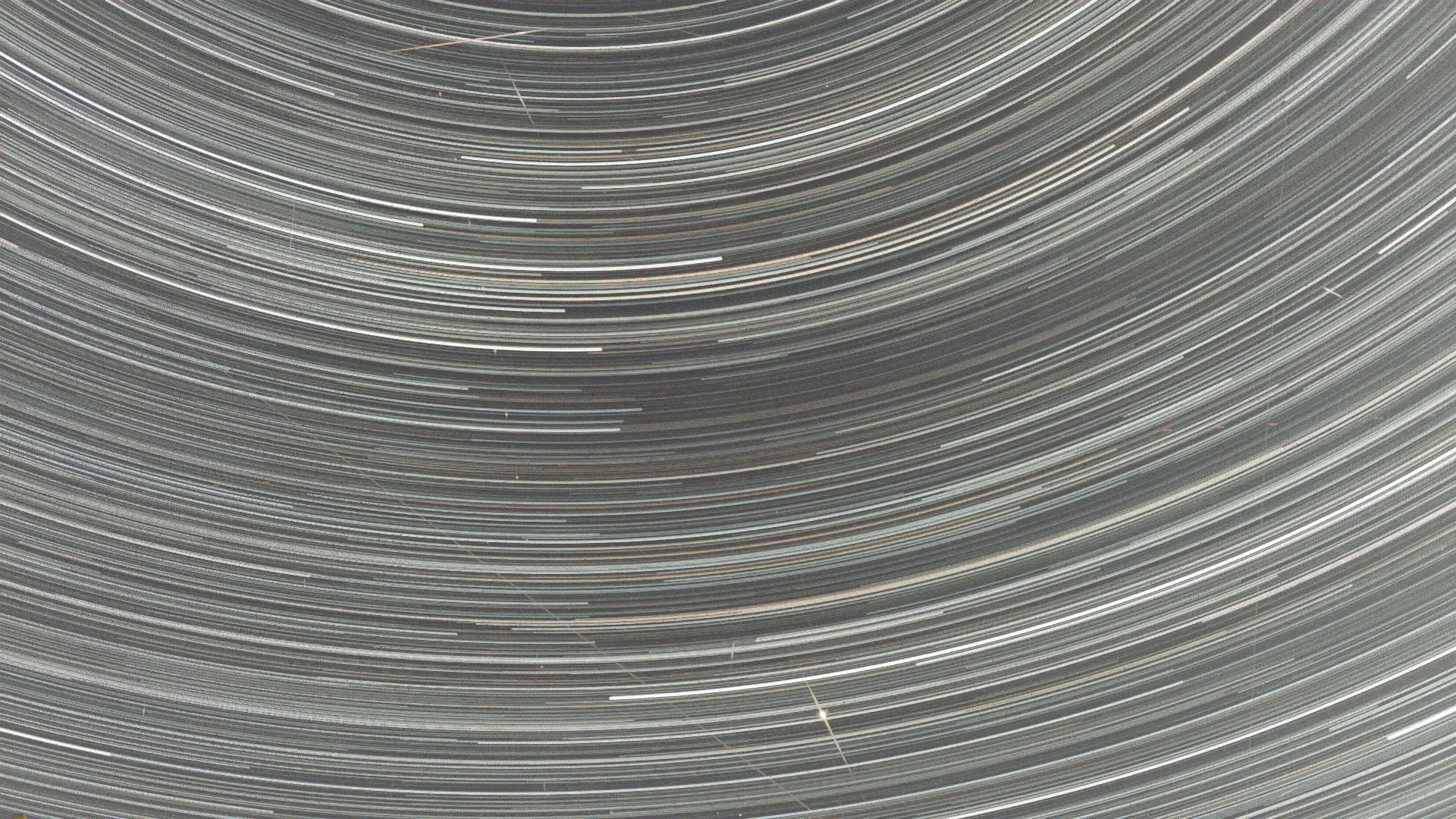
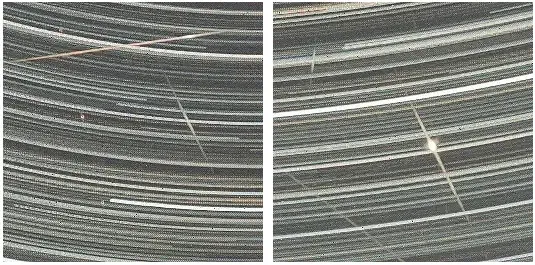
We caught a couple of Perseids, plus sporadics, aircraft and satellites. Here are a couple of close-ups of some of the meteors. The scope was pointing straight up.
You have to be lucky when photographing meteors. We did see a few more with naked-eye observation, but the camera wasn’t pointing at them. Oh well.
Galaxies next. I scheduled two shoots of the Triangulum Galaxy, one with the Astro filter and the other using the Duo Band filter to try to bring out the nebulosity. I then stacked them manually (not with the Mini’s Megastack facility) to get this:
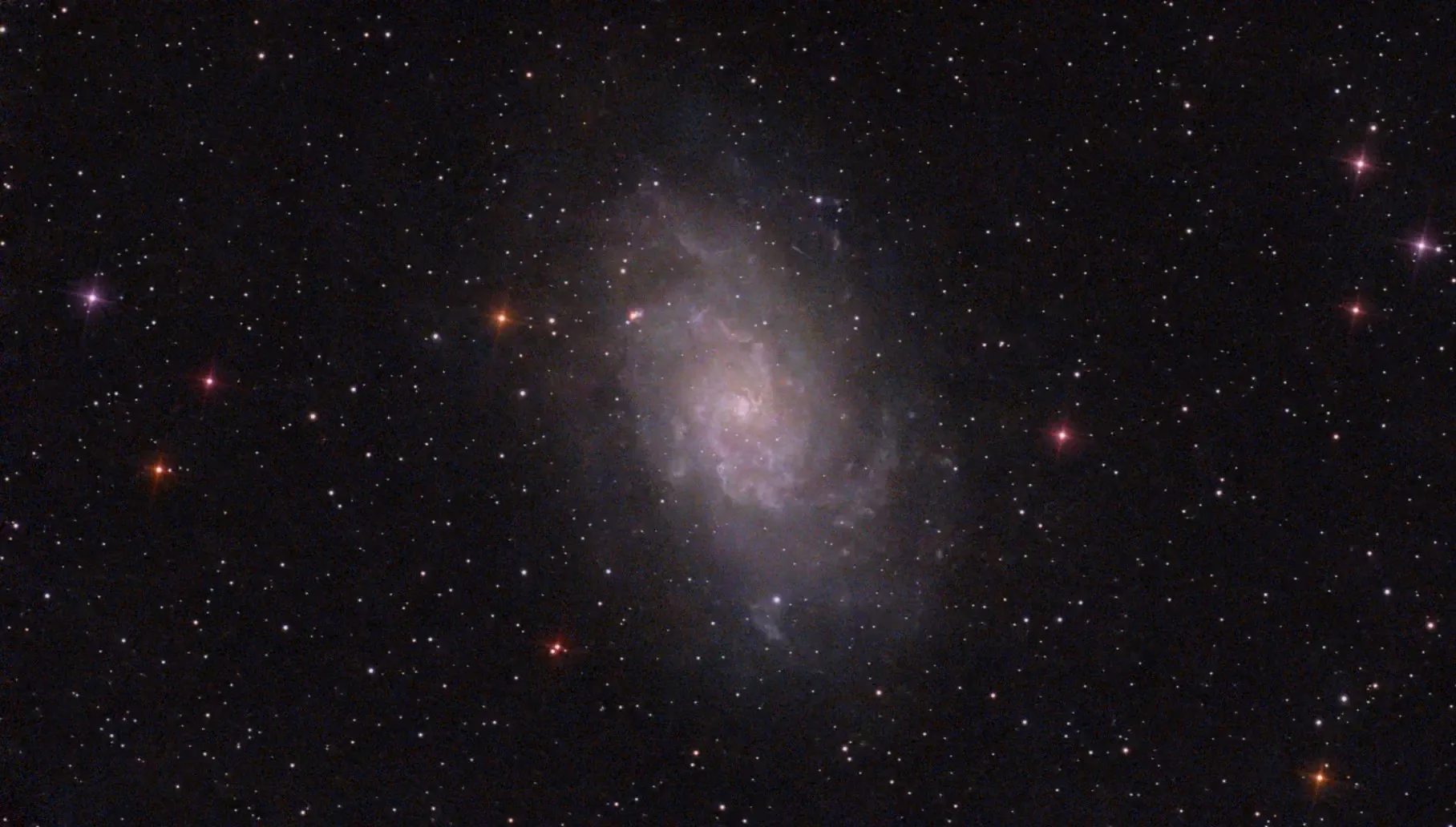
So a bit of an experiment. It clearly needs more exposures on the Duo Band, but it’s an improvement.
Details:
Target: Triangulum Galaxy (M 33, NGC 598)
Equipment: Dwarf Mini, Astro filter, 1% EQ
Time: 2026-08-12 00:39..02:01
Integration: 1hr 12mins (72×60secs, +4 failures), gain 70
Equipment: Dwarf Mini, Duo Band filter, 1% EQ
Time: 2026-08-12 02:09..03:20
Integration: 1hr 3mins (63×60secs, +3 failures), gain 70
Conditions: Clear, Bortle 6
Processing: PhotoDesk manual stack, equalisation, gamma
Finally, another addition to the megastack of M31, the Andromeda Galaxy:

Details continue to improve. The different colouration may be due to the Duo Band filter used on one of the stacks … actually I think I prefer the earlier effort.
Details:
Target: Andromeda Galaxy (M 31)
Equipment: Dwarf Mini, Astro filter, 1% EQ
Time: 2026-08-12 00:39..02:01
Integration: 1hr 33mins (93×60secs, +12 failures), gain 70
Megastacked with 4 other exposures
Conditions: Clear, Bortle 6
Processing: PhotoDesk equalisation, gamma
And so to bed…